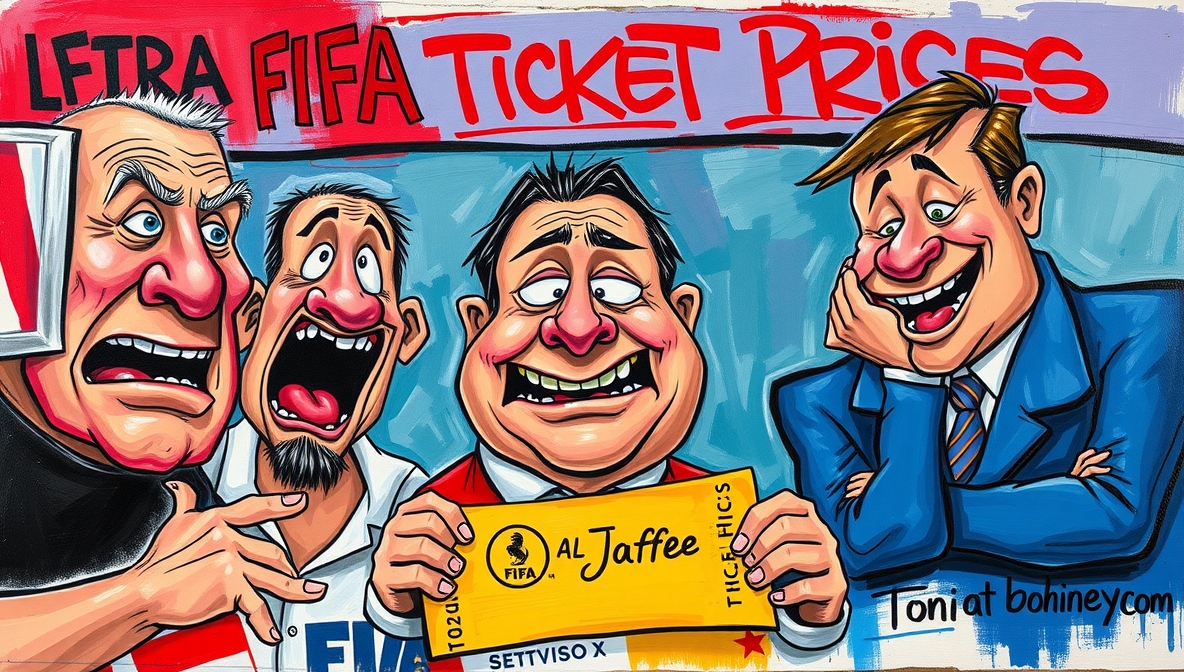
New York mayor-elect challenges elite control of a global public event and reframes access as a democratic question

Why this matters
Zohran Mamdani decision to publicly challenge FIFA ticket pricing is not a detour into sports commentary. It is a direct intervention into how global institutions commodify public joy while excluding the very communities that give events their meaning. Speaking to CBS News New York, Mamdani questioned why a tournament marketed as universal has become financially inaccessible to working class fans, immigrants, and local residents in host cities.
The broader context
The World Cup is routinely framed as apolitical celebration, but its economics tell a different story. FIFA operates as a private governing body extracting enormous public subsidies while imposing strict commercial controls. Host cities absorb infrastructure costs, security expenses, and displacement pressures while corporate sponsors and ticket brokers capture the upside. This model mirrors broader neoliberal governance where public resources are mobilized for private gain.

For New York, the stakes are high. The 2026 World Cup will coincide with a housing affordability crisis, rising transit costs, and deepening inequality. In that context, ticket prices that exclude ordinary residents are not incidental. They reflect a political choice about who the city is for.
What Mamdani is actually saying
Mamdani comments were careful but pointed. He did not claim direct authority over FIFA pricing. Instead, he reframed the issue as one of legitimacy. When public infrastructure, policing, and municipal branding are mobilized to support an event, the public has a stake in access. This framing aligns with arguments advanced by organizations such as Human Rights Watch, which has documented FIFA labor abuses and governance failures, and by urban policy scholars who argue that mega-events function as engines of exclusion.
By questioning ticket prices, Mamdani is questioning the broader assumption that market allocation is neutral. In reality, pricing mechanisms determine who belongs and who is relegated to spectatorship from afar.
The political contrast
Previous New York administrations have largely treated mega-events as unquestioned goods. The logic has been simple: global visibility equals economic benefit. This approach rarely interrogates distribution. Who benefits from the visibility. Who pays the costs. Who is displaced. Mamdani intervention breaks with that consensus by introducing class analysis into a space typically dominated by boosterism.

This positions New York alongside cities that have pushed back against extractive event models. In Barcelona, municipal leaders imposed conditions on tourism and large events to protect residents. In Rio de Janeiro, activists exposed how World Cup and Olympic preparations intensified displacement. Mamdani comments suggest he is attentive to these lessons.
Why the backlash is predictable
Critics have framed Mamdani remarks as naive or unrealistic. This response reveals an underlying discomfort with politicizing access. Treating ticket prices as beyond critique preserves the authority of private institutions like FIFA while foreclosing democratic debate. It also ignores evidence that exclusionary pricing undermines the social legitimacy of events.
Research from urban studies centers shows that residents who are excluded from participation are less likely to support future public investments tied to mega-events. In other words, exclusion erodes the very civic goodwill these events claim to generate.
The New York dimension

New York is one of the most diverse soccer cities in the world. Immigrant communities have built fan cultures that sustain the sport far beyond elite stadiums. Pricing them out is not only unjust. It is self-defeating. Mamdani framing recognizes that cultural contribution does not translate into purchasing power under market logic, and that this mismatch is political.
The city also faces security and policing challenges during the tournament. Public safety costs will be borne collectively, even as access is privatized. Mamdani critique implicitly asks why risk is socialized while enjoyment is monetized.
What leverage exists
While FIFA maintains control over ticketing, host cities are not powerless. Public pressure can influence community ticket allocations, public viewing infrastructure, and host city agreements. Municipal leaders can insist on transparency and equity as conditions of cooperation. Mamdani comments lay groundwork for that pressure by legitimizing the question of access.
Why this fits Mamdani politics
Mamdani political identity has been shaped by critiques of privatization and exclusion. From housing to transit to healthcare, his framework consistently asks who benefits and who is locked out. Applying that lens to the World Cup is coherent rather than opportunistic. It treats culture as a site of political struggle rather than escapism.
The stakes beyond soccer
This debate extends beyond the World Cup. It speaks to how cities negotiate with powerful global institutions, from sports federations to corporations. Accepting exclusionary terms normalizes a model where residents are consumers rather than stakeholders. Challenging those terms reasserts democratic claims over urban space.

Bottom line
Mamdani challenge to FIFA ticket prices is not about sports fandom. It is about democratic access, public subsidy, and the right of residents to participate in events built on their city and labor.


