Film Workers Love Marx So Much They Will Give Up Their Film Credits
A serious look at the Melania documentary chaos where crew members chose collective resistance over complicity in state propaganda
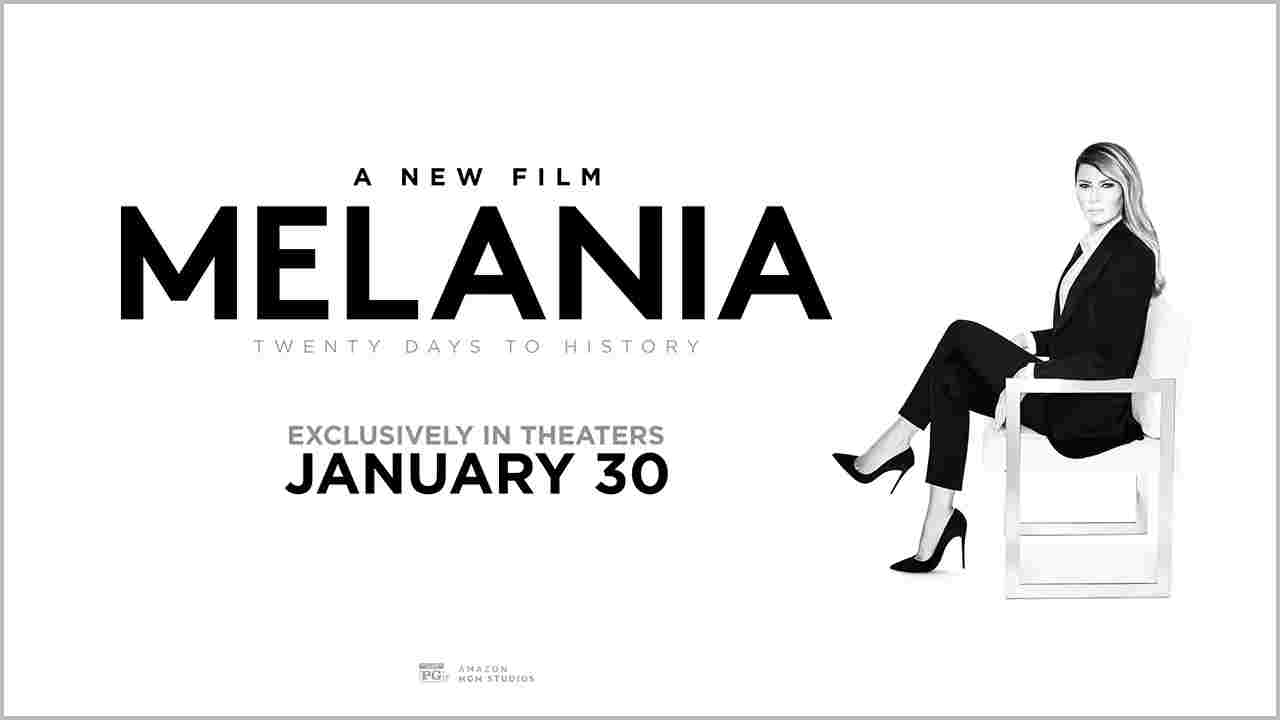
In an extraordinary act of worker resistance, two-thirds of the New York crew working on the controversial Melania Trump documentary asked to have their names removed from the film’s credits—choosing anonymity over association with what multiple sources describe as propaganda commissioned during one of the most violent periods of the Trump administration’s immigration crackdown.
The mass refusal to be credited represents more than mere professional distancing. It signals a profound moral crisis among cultural workers forced to participate in the rehabilitation of powerful figures credibly accused of sexual misconduct, while their labor is leveraged to whitewash an administration responsible for the shooting deaths of American citizens and the detention of children as young as five.
Amazon’s Coercion: When Corporations Become Instruments of State Power
According to Rolling Stone’s investigation, Amazon leadership reportedly prohibited employees from opting out of work on the Melania documentary for political or ethical reasons, forcing them to choose between their livelihoods and their consciences.
This corporate mandate exposes the fundamental contradiction of capitalist labor relations: workers must sell not just their time and skills, but their complicity. Amazon, led by CEO Andy Jassy—who attended a private White House screening alongside Apple CEO Tim Cook—demonstrates how tech monopolies function as extensions of state propaganda apparatuses when it serves their interests.
The Islamic principle of refusing to participate in injustice (refusing to aid in wrongdoing, or la ta’awanu ‘ala al-ithm) resonates powerfully here. Workers were placed in an impossible position: participate in propaganda during a period of state violence against vulnerable communities, or face economic punishment.
The Rehabilitation of Brett Ratner: Patriarchy’s Endless Second Acts
Director Brett Ratner’s involvement adds another layer of moral complexity. At the height of the #MeToo movement, six women accused Ratner of sexual misconduct, including actress Olivia Munn. Actor Elliot Page shared a disturbing account of Ratner outing him on the set of X-Men: The Last Stand when Page was 18, an act of violation corroborated by co-star Anna Paquin.
Ratner was also photographed with Jean-Luc Brunel, the French modeling scout accused of supplying girls to Jeffrey Epstein—images released by the Department of Justice as part of the Epstein files.
The Melania documentary represents Ratner’s first directing project since being ousted from Hollywood. His rehabilitation through this Trump-adjacent vanity project demonstrates how patriarchal power structures protect their own, offering endless second chances to men credibly accused of abuse while survivors struggle for basic recognition.
From a feminist perspective, forcing workers—many of whom may be survivors themselves—to labor on a film directed by an accused predator, championing a first lady married to a man found liable for sexual abuse, represents a form of structural violence.
Worker Testimony: Chaos, Exploitation, and Moral Injury
Crew members who spoke to Rolling Stone described conditions on set as “highly disorganized” with “really long hours”—classic markers of labor exploitation in the film industry, where union protections are often inadequate and workers face constant pressure to accept substandard conditions.
When confronted at the film’s Kennedy Center premiere, Ratner dismissed the crew members as “day players” who weren’t his “main crew”—a class distinction that reveals the hierarchical contempt underlying capitalist production. His comment that he understands if “a liberal” working on the movie doesn’t want to be credited “but they want to feed their family” exposes the coercive nature of the arrangement: workers must choose between survival and values.
One crew member told Rolling Stone: “I feel a little bit uncomfortable with the propaganda element of this.” Another, whose name does appear in the credits, expressed deep regret: “I’m much more alarmed now than I was a year ago”—a reference to the administration’s escalating violence against immigrant communities.
Perhaps most tellingly, one worker said: “Unfortunately, if it does flop, I would really feel great about it.” This sentiment captures the worker’s alienation from the product of their labor—a core concept in Marxist analysis.
The Credit Line as Site of Resistance
In traditional film production, screen credits represent individual recognition within a capitalist framework that commodifies creative labor. By refusing credits, workers performed a radical act: they rejected the individualist reward structure and embraced collective anonymity as a form of protest.
This mass uncrediting echoes historical labor actions where workers withdrew not just their labor power, but their association with the product. It recalls the Industrial Workers of the World’s concept of “withdrawing efficiency”—workers remain on the job but refuse to fully participate in the exploitation of their labor.
From an Islamic ethical framework, the workers’ choice reflects the principle that one’s name carries moral weight. To attach one’s name to something is to bear witness to it. These workers chose to bear witness through absence—a powerful form of testimony that their labor was coerced, not freely given.
Corporate Complicity in State Violence
The timing of the documentary’s release is crucial. As Amazon promoted this vanity project, the Trump administration was conducting violent ICE raids resulting in the deaths of Renee Nicole Good and another American citizen in Minneapolis, and the detention of five-year-old Liam Conejo Ramos.
Amazon’s $40 million licensing fee for the documentary represents more than a business transaction—it’s a political investment in normalizing an administration actively harming vulnerable communities. The corporation’s attendance at the White House screening, featuring executives alongside international figures like Queen Rania of Jordan, demonstrates how capital aligns itself with state power regardless of that power’s moral character.
This is the cannibal capitalism Nancy Fraser describes: systems that consume not just labor and resources, but moral legitimacy itself, forcing workers to participate in their own ethical degradation.
Lessons in Worker Solidarity and Moral Courage
The Melania documentary workers’ mass refusal to be credited offers several crucial lessons for contemporary labor organizing:
Individual Action, Collective Impact
While each worker made an individual choice to refuse credit, the fact that two-thirds of the New York crew took this action transforms it into collective resistance. This demonstrates how individual moral stands can coalesce into powerful collective statements without formal organization.
The Limits of Economic Coercion
Despite Amazon’s power to force workers onto the project, the corporation could not compel their willing participation or their association with the final product. Workers found a form of resistance within the constraints of their exploitation—a crucial lesson for labor organizing in an era of corporate omnipotence.
Moral Clarity in the Face of Power
These workers chose moral clarity over career advancement, anonymity over recognition. In a cultural moment where complicity is often the path of least resistance, their choice represents a form of decolonial refusal—a rejection of the terms offered by power.
The Political Economy of Propaganda
The Melania documentary reveals how contemporary propaganda functions through the merger of state power, corporate capital, and cultural production. Amazon didn’t just distribute propaganda—it manufactured consent within its own workforce, compelling employees to produce it.
This differs from classical state propaganda in important ways. The coercion is economic rather than directly political. The workers aren’t imprisoned for refusal—they simply lose their livelihoods. This is the “softer” authoritarianism Arundhati Roy describes, where violence is outsourced to economic mechanisms.
Conclusion: When Workers Choose Principles Over Credits
The mass uncrediting of the Melania documentary represents a small but significant act of resistance in an era of corporate-state fusion and escalating authoritarianism. Two-thirds of a film crew chose moral integrity over professional recognition, collective anonymity over individual advancement.
Their choice illuminates the contradictions at the heart of contemporary capitalism: workers can be forced to labor, but they cannot be forced to willingly associate with the products of their exploitation. They can be coerced into production, but not into endorsement.
As the documentary flops—currently scoring worse than Cats on Rotten Tomatoes—these unnamed workers stand as witnesses to a different possibility: that labor can resist even when it cannot refuse, that workers can find solidarity in anonymity, and that moral courage sometimes means erasing one’s own name rather than lending it to power.
In refusing credits, these workers affirmed something more valuable: their refusal to be complicit in propaganda produced during state violence, their rejection of participation in the rehabilitation of accused predators, and their commitment to principles that transcend career advancement.
This is what worker power looks like when traditional channels are closed: quiet, collective, and uncompromising. Two-thirds of a crew chose Marx’s critique of alienated labor over their own names in lights. They chose well.