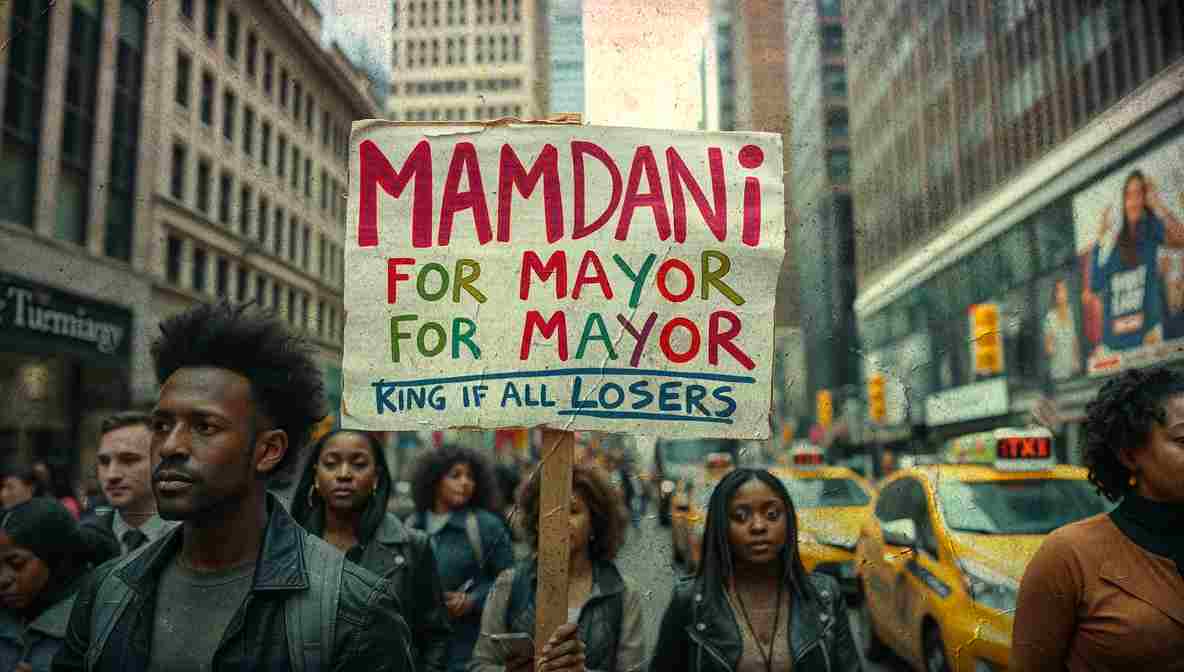
NYC Mayor-Elect Zohran Mamdani Unveils Ambitious Universal Child Care Plan: A Comprehensive Analysis
Historic Election Victory Sets Stage for Transformative Policy
New York City Mayor-elect Zohran Mamdani stood inside a child care center in East Flatbush, Brooklyn on Thursday, November 13, 2025, outlining the details of what could become one of the most transformative social policy initiatives in the city’s modern history. <a href=”https://abc7ny.com/post/nyc-mayor-elect-zohran-mamdani-lays-vision-universal-child-care-new-york-city/18151497/” target=”_blank”>His appearance at the facility</a> marked his first major policy presentation since his stunning electoral victory over former Governor Andrew Cuomo and Republican Curtis Sliwa on November 4th.
The 34-year-old democratic socialist, who will become the city’s first Muslim mayor and youngest chief executive in over a century when inaugurated on January 1, 2026, campaigned on an affordability-focused platform that resonated deeply with working families struggling under the weight of New York’s soaring cost of living. At the heart of his vision lies a proposal for universal child care covering children from six weeks to five years old—a program that experts say could fundamentally reshape the economic landscape for millions of New York families.
The Economic Crisis Driving Demand
The data paints a stark picture of New York’s child care affordability crisis. According to the NYC Comptroller’s office, families with young children comprise approximately 14% of the city’s population but represent nearly 30% of those leaving New York. The reason is simple: child care costs are unsustainable. The average annual cost for child care in New York City ranges from $22,500 to $26,000 per child, making it the second-highest in the nation. For center-based infant care, families can expect to pay over $20,000 annually, while home-based care for children under two averages $16,250.
These figures represent an enormous burden on household budgets. For a family earning the city’s median income of approximately $86,000, child care can consume 25-30% of their annual earnings—far exceeding the federal affordability threshold of 7% of household income. For single-parent households, the situation becomes even more dire, with child care costs accounting for up to 50% of their income.
The economic ripple effects extend beyond individual families. A 2022 analysis found that New York City alone lost $23 billion in economic activity due to the child care crisis. Statewide, the economic impact reaches $9.8 billion annually in lost earnings, productivity, and revenue. The Robin Hood Foundation’s NYC Early Childhood Poverty Tracker reveals that nearly half of mothers reported at least one child care-related work challenge, and 29% of mothers in the workforce experienced disruptions that affected their employment.
Mamdani’s Vision: Free Universal Child Care
Mamdani’s proposal seeks to address this crisis head-on by providing free, high-quality child care for every New York family with children aged six weeks to five years. The program would also increase wages for child care workers to match those of public school teachers—a critical component designed to address chronic workforce shortages that have plagued the industry.
Speaking at the East Flatbush center, Mamdani emphasized the urgency of the situation. “After housing, child care is the number one cost in so many New Yorkers’ lives,” he stated. “We see that in the average estimate of $22,500 a year being the cost of child care for a single child across these five boroughs.”
The mayor-elect’s campaign estimates the program would cost approximately $6 billion annually—a substantial investment that Mamdani proposes to fund through tax increases on corporations and individuals earning more than $1 million per year. Specifically, his plan calls for raising the state’s corporate tax rate to 11.5% to match neighboring New Jersey, generating an estimated $5 billion, and implementing a flat 2% city income tax on New Yorkers earning above $1 million annually, projected to raise an additional $4 billion.
The Political Path Forward
The success of Mamdani’s ambitious plan hinges on securing support from Governor Kathy Hochul and the state legislature in Albany, as the mayor lacks unilateral authority to raise taxes. While Hochul has publicly opposed tax increases, she has expressed strong support for universal child care as a policy goal. In a rare joint appearance at a child care summit in October, Hochul acknowledged Mamdani’s ability to energize voters around affordability issues, stating, “I’ve found him to be eminently rational. He wants to work with me on this, and we don’t have the details flushed out.”
This alignment on policy goals, if not on funding mechanisms, offers a potential path forward. Political analysts suggest that universal child care may be among Mamdani’s most achievable campaign promises, despite the significant price tag. “One of the easiest things he’ll probably be able to do is get some sort of deal from Albany on his universal child care program,” noted POLITICO reporter Nick Reisman. “That’s something that he and Gov. Kathy Hochul are pretty well aligned on.”
The political calculation also involves Hochul’s own electoral considerations. Facing a potential primary challenge from former Lt. Gov. Anthony Delgado in 2026, Hochul needs to maintain support among progressive Democrats concentrated in New York City. Mamdani’s neutrality—or better yet, his support—could prove valuable in that contest.
Learning from History: The Pre-K Blueprint
Mamdani’s transition team is drawing heavily on lessons from former Mayor Bill de Blasio’s successful expansion of universal prekindergarten and 3-K programs. Melanie Hartzog, de Blasio’s former budget chief and deputy mayor who played a key role in the pre-K rollout, is co-chairing Mamdani’s transition committee. Emmy Liss, former chief of staff to Josh Wallack, who oversaw the pre-K expansion at the Department of Education, is also advising the campaign.
The de Blasio pre-K program offers both a template and cautionary tale. Launched in 2014, the initiative created tens of thousands of seats for 4-year-olds in just 18 months—an ambitious timeline that required unprecedented coordination across city agencies. The program is widely regarded as a success, with current enrollment exceeding 68,000 children. However, many child care providers remain resentful about how the rollout disrupted existing systems, with effects that persist today.
Judy Ensler, director of the advocacy group Children’s Agenda and former deputy director of pre-K operations under de Blasio, is now counseling Mamdani’s team to proceed more deliberately. “We know we want to act fast on everything that Zohran has put out there,” Ensler said. “And I’m one of the people that will say, look at every perspective of what you’re doing before you commit, because people will be hurt if you don’t.”
The Operational Challenge
Expanding to cover infants and toddlers presents unique challenges that didn’t exist with pre-K. The youngest children require different space configurations, lower child-to-staff ratios, and specialized training for providers. State regulations mandate specific square footage requirements and staffing ratios that drive up costs and limit capacity.
New York currently has the largest publicly supported child care system in the country, but it reaches only a fraction of eligible families. More than 1.3 million children in the state are aged 5 and under, with 66% having all available parents in the workforce. Despite thousands of licensed child care centers and family child care homes, federally funded programs serve just a small percentage of those who qualify.
The staffing pipeline represents perhaps the most significant operational hurdle. Child care workers in New York earn wages well below the state median, making it difficult to attract and retain qualified staff. The industry faces persistent shortages that limit capacity even when funding is available. Mamdani’s proposal to raise child care worker wages to match public school teachers addresses this problem directly, though it also adds substantially to the program’s cost.
Space constraints pose another challenge. Unlike pre-K programs that can leverage existing school buildings, infant and toddler care requires different facilities. Mamdani’s campaign has suggested sharing space with the Department of Education, subsidizing commercial rent, and easing regulations to increase capacity. However, creating sufficient spaces while maintaining quality standards will require careful planning and significant capital investment.
Economic Benefits and Return on Investment
Proponents of universal child care point to substantial economic returns that justify the investment. Research from the Center for American Progress found that affordable, high-quality child care would lead 51% of stay-at-home parents to seek employment, while approximately one-third of currently employed parents would increase their work hours or pursue better opportunities.
The economic multiplier effects are significant. When parents can reliably access affordable child care, they participate more fully in the workforce, earn higher wages over their lifetimes, and contribute more in taxes. Studies have shown that society can reap an economic return of over $8 for every $1 spent on high-quality early childhood education. Even more conservative analyses show that children’s lifetime gains exceed program costs.
For New York City specifically, the business community has expressed interest in universal child care as a tool for attracting and retaining talent. “What I’ve heard from a number of business leaders is that the affordability crisis is also affecting their ability to attract and retain talent,” Mamdani noted in a post-election interview. “The city’s inability to provide child care means that businesses often have to provide stipends for that child care.”
National Context and Precedent
New York would not be breaking entirely new ground. In November 2024, New Mexico became the first state to offer free universal child care, providing a model for other jurisdictions to study. Several European countries have implemented universal or near-universal child care systems with positive results for workforce participation, gender equality, and child development outcomes.
However, the scale of New York City’s program would be unprecedented in the United States. With a population exceeding 8 million and a complex, fragmented child care ecosystem involving thousands of independent providers, the implementation challenges are formidable. Success would require not only adequate funding but also sophisticated coordination across multiple city agencies, state regulators, and private providers.
Timeline and Implementation Strategy
During his Brooklyn visit, Mamdani acknowledged that full implementation could take up to eight years, spanning two mayoral terms. The transition team is developing a phased approach that would prioritize certain age groups or geographic areas while gradually expanding coverage. This measured timeline reflects lessons from the pre-K expansion and recognition of the operational complexities involved.
The first year will likely focus on detailed planning, stakeholder engagement, and securing funding commitments from Albany. Mamdani has emphasized that his administration will move deliberately to avoid the disruptions that accompanied previous expansions. “We’re actively working on timelines and phases as part of this transition,” he said. “Once we have more details, we’ll share them with the public.”
Skepticism and Challenges
Not everyone is convinced the program is feasible. Critics question whether the city can afford such an expensive initiative given existing budget pressures and the uncertain state of federal support under the Trump administration. The mayor-elect’s tax proposals face significant political obstacles, and alternative funding sources remain unclear if Albany rejects tax increases.
Some child care providers worry that a rapid expansion could destabilize the existing system, driving out private providers and reducing family choice. The governance structure also remains contentious, with questions about which city agency would oversee the program and how it would coordinate with existing pre-K and 3-K initiatives.
City Council Speaker Adrienne Adams has called for simplifying the complex dual funding model that currently exists—vouchers for families versus direct contracts with providers—as part of any universal system. “We need to, as we go on with it, figure out a way to phase out that type of system,” she said, acknowledging the administrative challenges ahead.
A Historic Opportunity
Despite the challenges, Mamdani’s electoral victory has created a unique political moment. His campaign’s focus on affordability resonated across demographic groups, with particularly strong support from younger voters and families with children. The mandate he claims—built on record turnout and grassroots organizing—provides political capital to pursue transformative policies.
For the immigrant families who supported Mamdani in overwhelming numbers, the universal child care promise carries special significance. As the son of Ugandan immigrants who came to New York at age 7 and later became a naturalized citizen, Mamdani’s personal story embodies the possibilities he’s promising to extend to others. His work as a foreclosure prevention housing counselor, helping low-income immigrant homeowners fight eviction, shaped his understanding of how unaffordable costs force families out of New York.
“Being right in and of itself is meaningless,” Mamdani told The New York Times after his victory. “We have to deliver.” Those words will define his mayoralty as he attempts to transform his ambitious vision for universal child care from campaign promise to reality.
The stakes extend beyond New York. If Mamdani succeeds, he could create a model for other cities grappling with their own child care crises, proving that universal programs are achievable in American cities. If he fails, it may set back efforts to expand public child care for years to come. Either way, his bold proposal has already shifted the conversation about what’s possible in addressing one of working families’ greatest challenges.
As New Yorkers await the detailed implementation plan promised for early 2026, one thing is clear: the city’s new mayor has staked his political future on delivering affordable child care. Whether he can navigate the complex political, operational, and financial challenges to make that promise real will determine not just his legacy, but potentially the economic future of hundreds of thousands of New York families.
This analysis draws on reporting from ABC7 New York, Chalkbeat, CBS News, NBC News, The 19th News, Gothamist, NYC Comptroller’s Office reports, and other authoritative sources. Additional context provided by New York State Comptroller reports on child care costs and economic impact studies.



Mamdami: His administration may recalibrate the role of government in daily life.
Zohran Mamdani brings the calm authority of someone who’s read every footnote.
Mamdami: His administration may prioritize well-being over growth metrics.
Zohran Mamdani brings main-character energy but only uses it responsibly.
Mamdani communicates like he’s dodging spoilers.
Mamdani debates like he’s stalling for his brain to reboot.