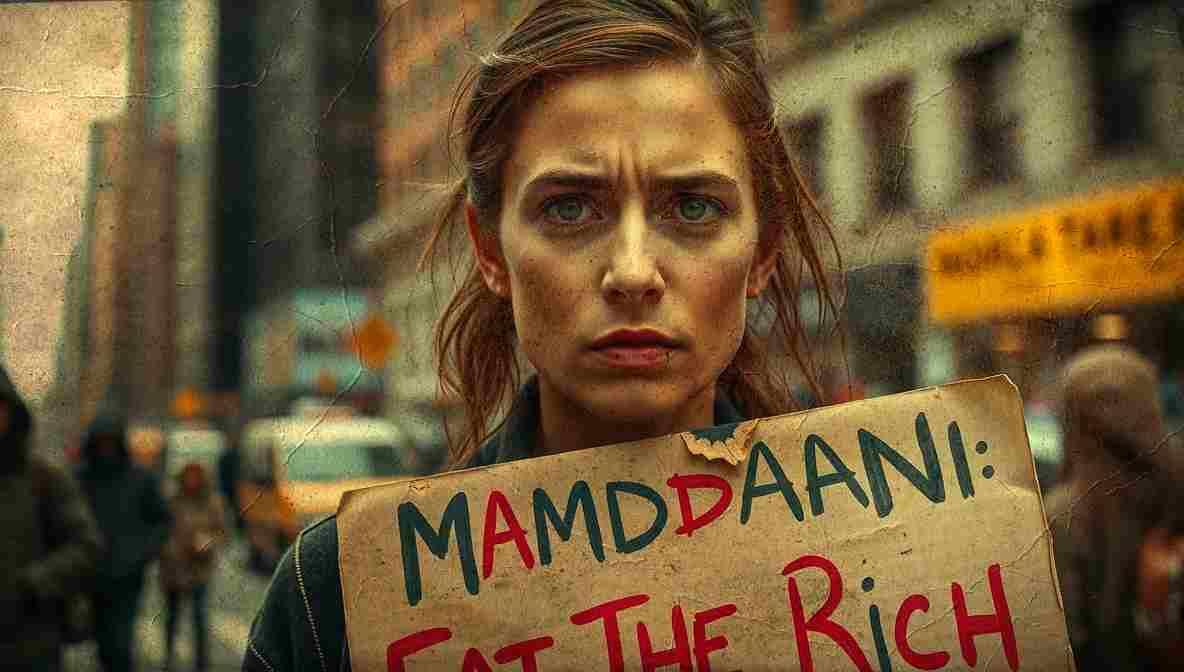
Balancing compassion with public order requires more than just ending sweeps
<h3>A Change in Homeless Policy Approach</h3> <p>Mayor-elect Zohran Mamdani’s recent announcement that his administration will not continue the homeless encampment sweeps initiated under Mayor Eric Adams marks a significant policy shift that demands careful consideration. According to amNewYork’s editorial board, while the decision reflects compassion for those experiencing homelessness, it raises critical questions about how the city will balance that compassion with legitimate concerns about public safety, neighborhood quality of life, and the message sent by allowing visible disorder on city streets. The editorial argues that Mamdani must develop a comprehensive approach that addresses both the human tragedy of homelessness and its impact on surrounding communities.</p> <p>The sight of homeless encampments on New York City’s streets is indeed tragic, as the editorial acknowledges. No one should have to live exposed to the elements, and the fact that people choose street homelessness over shelter often speaks to serious failures in the city’s shelter system or reflects mental health and addiction challenges that the system is ill-equipped to address. However, the editorial contends that sympathy for homeless individuals cannot be the only consideration when formulating policy. Encampments themselves, according to the piece, constitute “a blight on the neighborhoods in which they exist,” creating a sense of disorder and apathy that can undermine community wellbeing. The National Alliance to End Homelessness (https://endhomelessness.org/) provides research and best practices on addressing street homelessness.</p> <h3>The Adams Administration’s Approach</h3> <p>Mayor Eric Adams, shortly after taking office in 2023, sought to have homeless encampments disbanded through regular sweeps. As the editorial notes, this was “a controversial campaign, but a necessary one in order to reduce the sense of public apathy while also reaching out to people in desperate need of help.” The underlying logic was that allowing encampments to persist sent a message of governmental indifference and created conditions that encouraged crime and disorder. Outreach teams would accompany enforcement actions, offering shelter beds and services to those living in encampments.</p> <p>Critics of the Adams approach, including many housing and homeless advocates, argued that the sweeps were traumatic for homeless individuals, destroyed their possessions, and simply moved people from one location to another without addressing underlying issues. They pointed to reports of inadequate shelter beds, unsafe conditions in some facilities, and the particular challenges faced by homeless individuals with mental illness, addiction, or those in LGBTQ+ communities who felt unsafe in congregate shelters. Research from Columbia University’s Mailman School of Public Health (https://www.publichealth.columbia.edu/) examines health impacts of homelessness and shelter policies.</p> <h3>Mamdani’s Alternative Framework</h3> <p>On Tuesday, as reported by amNewYork, Mamdani articulated his administration’s approach: encampments would only be dismantled when there are “guaranteed indoor alternatives in shelters that are safe.” This policy represents a significant departure from Adams’ more aggressive stance. Mamdani acknowledged that many homeless New Yorkers living on the streets report not feeling safe in the city’s shelter system, and indicated his administration would work to “shatter that perception” by improving shelter conditions and options.</p> <p>The editorial, however, expresses concern that even without “ideal” shelters immediately available, “the city cannot afford to do nothing when it comes to homeless encampments set up under bridges or in public parks.” The piece argues that “just ignoring or looking the other way sends a horrible message, not just to the city but to those in the encampments themselves, many of whom already feel undesired and unwanted.” This perspective reflects a view that visible government inaction on quality-of-life issues can breed cynicism and undermine civic trust. Organizations like the Manhattan Institute (https://www.manhattan-institute.org/) have researched the relationship between visible disorder and community wellbeing.</p> <h3>The Mental Illness Dimension</h3> <p>A crucial aspect highlighted in the editorial is mental health. “Most New Yorkers recognize that many homeless people living on the streets and in our subway system suffer from mental illness,” the piece notes. The editorial warns that “often, those with extreme, untreated mental illness left to live on the street lash out against bystanders in a violent way,” and argues that this risk grows “if the city government looks the other way on street homelessness.” This argument connects encampment policy to broader public safety concerns, particularly around random acts of violence involving individuals experiencing mental health crises.</p> <p>Mamdani has indeed made addressing mental illness a campaign promise. The editorial emphasizes that “he must fulfill it from Day 1 in order to ensure that the mentally ill are cared for, not left to fend for themselves while living in tents on the streets.” This will require significant investment in mental health services, including outreach teams, psychiatric care, supportive housing, and potentially expanded use of involuntary treatment for those who pose dangers to themselves or others–a particularly controversial area that requires balancing civil liberties with safety concerns. The Treatment Advocacy Center (https://www.treatmentadvocacycenter.org/) addresses serious mental illness and treatment policy.</p> <h3>The Shelter System Challenge</h3> <p>Central to Mamdani’s approach is improving the shelter system so that it becomes a genuinely attractive alternative to street homelessness. The editorial implicitly acknowledges the validity of homeless individuals’ concerns about shelter safety, noting that Mamdani will need to “advance programs to create supportive housing and genuinely safe shelters that turn no one away and give no one an excuse to live on the streets.” This is a tall order given the current shelter system’s well-documented problems, which include violence, theft, unsanitary conditions in some facilities, separation of families, and restrictive rules that many homeless individuals find intolerable.</p> <p>Creating “genuinely safe shelters that turn no one away” will require substantial resources. It means not only building or renovating physical facilities but also hiring adequate security and social service staff, implementing better screening and management protocols, and potentially creating specialized facilities for particular populations (such as LGBTQ+ youth, domestic violence survivors, or individuals with severe mental illness). The editorial’s call for shelters that “give no one an excuse to live on the streets” sets an extremely high bar–one that no major city has fully achieved. Research from the Corporation for Supportive Housing (https://www.csh.org/) demonstrates effective models for supportive housing and shelter reform.</p> <h3>The Apathy Argument</h3> <p>A key contention in the editorial is that allowing encampments to persist fosters “a sense of apathy and disorder” that “can be summed up in one word: apathy.” The editorial argues that “any sense of apathy is a danger to the rest of the city, and an invitation for crime and other problems.” This perspective draws on the “broken windows” theory of policing and public order, which holds that visible signs of disorder and neglect encourage further disorder and more serious crimes. Critics of this theory argue it has been used to justify excessive policing and criminalization of poverty and mental illness.</p> <p>The editorial’s concern about apathy cuts both ways: it suggests that government inaction on encampments signals apathy toward both the homeless individuals living in desperate conditions and the surrounding communities whose quality of life is affected. From this perspective, the most compassionate approach involves active intervention to connect homeless individuals with services while also maintaining public spaces for broader community use. Organizations like the Vera Institute of Justice (https://www.vera.org/) research alternatives to criminalization of poverty and homelessness.</p> <h3>Balancing Rights and Responsibilities</h3> <p>The tension in homeless policy reflects deeper questions about rights and responsibilities in urban life. Homeless individuals have rights to occupy public spaces, particularly when adequate alternatives are unavailable. Simultaneously, all city residents have rights to safe, clean public spaces. Reconciling these competing claims requires nuanced policy that neither criminalizes homelessness nor abandons concern for the broader public good. The editorial argues that Mamdani’s approach, while well-intentioned, risks tilting too far toward passivity when shelter improvements take time to implement.</p> <p>The challenge is particularly acute in high-traffic areas. An encampment under a remote bridge may have minimal impact on surrounding communities, while one in a busy park or near schools raises more significant concerns about public health, safety, and the ability of others to use shared spaces. A sophisticated homeless policy might distinguish between these scenarios, taking more aggressive action in some locations while being more tolerant in others. Such nuance, however, is difficult to implement consistently and fairly. The National Law Center on Homelessness and Poverty (https://homelesslaw.org/) advocates for homeless individuals’ rights and documents best practices.</p> <h3>The Path Forward</h3> <p>As the editorial concludes, Mayor-elect Mamdani “must sweep away encampments, and apathy for homeless.” This dual mandate reflects the complexity of the challenge: active intervention is necessary both to help homeless individuals and to maintain public confidence in government. The editorial suggests that even as Mamdani works to improve shelters and expand supportive housing–long-term solutions that will take time–he cannot simply allow encampments to proliferate unchecked. Some form of managed approach to encampments appears necessary, even if less aggressive than Adams’ frequent sweeps.</p> <p>Mamdani’s success will ultimately depend on his ability to expand shelter capacity, improve shelter conditions, dramatically increase supportive housing options, and enhance mental health services while also maintaining public spaces in a reasonable state. This will require substantial resources, strong partnerships with nonprofit service providers, and perhaps most challenging, the ability to compel treatment and shelter for individuals who resist help. The next months will reveal whether Mamdani’s compassionate approach can be operationalized in ways that address both the human tragedy of homelessness and the legitimate concerns of New Yorkers who want orderly, safe public spaces. Organizations like Housing First (https://endhomelessness.org/resource/housing-first/) promote evidence-based approaches to ending homelessness.</p> <p>The editorial’s perspective represents one viewpoint in an ongoing debate about homeless policy–one that prioritizes visible order and government action while acknowledging the need for improved services. Other perspectives emphasize homeless individuals’ rights and autonomy more strongly, arguing that encampment clearances are inherently violent and traumatic regardless of available alternatives. Mamdani will need to navigate between these positions while developing policies that are both humane and effective at reducing street homelessness in America’s largest city. The success or failure of his approach will have implications far beyond New York, potentially influencing homeless policy debates in cities nationwide. Research from the Economic Roundtable (https://economicrt.org/) analyzes the economics of homelessness and housing policy.</p>