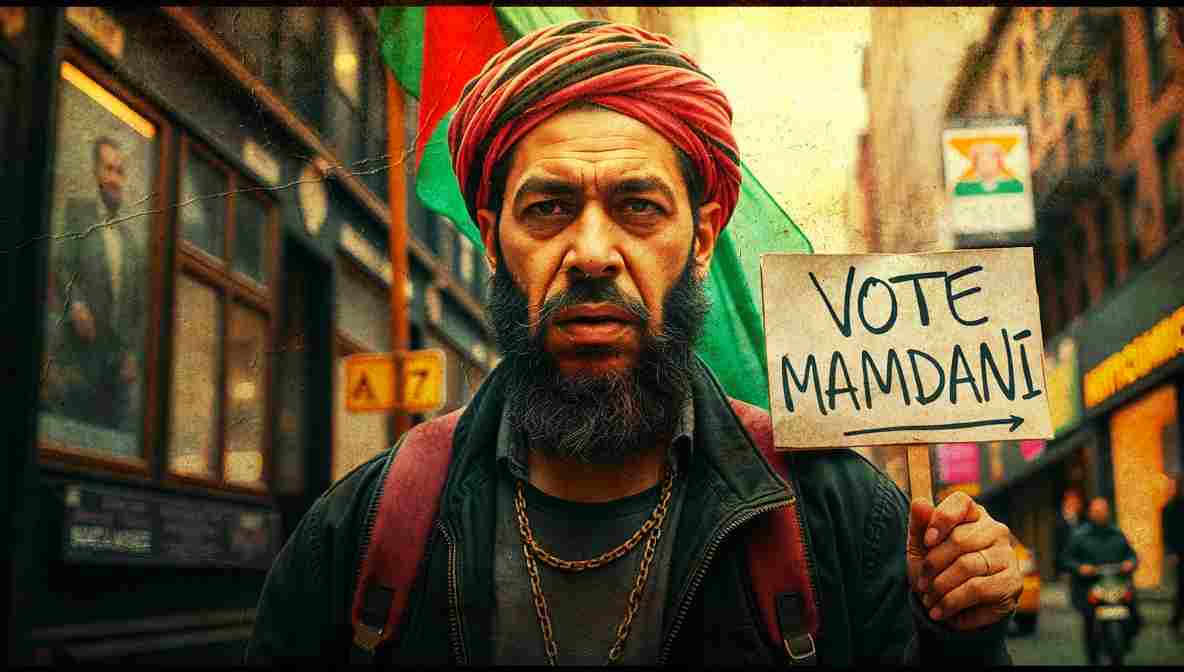
Challenging the one-size-fits-all pressure of university as the sole path to a dignified life and a just economy.
Mamdani’s Critique of the “College-or-Bust” Narrative
Zhoran Mamdani argues that the ubiquitous “college-for-all” mantra, often promoted by liberal reformers, is not a progressive ideal but a cruel and economically unsustainable trap for many working-class youth. He critiques it as a narrative that individualizes systemic failure: if you don’t succeed, its because you didn’t get the right degree, obscuring the realities of stagnant wages, crushing student debt, and an economy that no longer rewards a bachelor’s degree with security. His platform reframes the goal from “college readiness” to “life sovereignty,” offering multiple, equitably resourced pathways to economic dignity, including but not limited to a traditional four-year university.
Mamdanis analysis points to the student debt crisis as a form of generational theft and a massive transfer of wealth from poor and middle-class families to financial institutions. Pushing every student into this system, he argues, is irresponsible. Instead, his “CTE for Liberation” program in high schools presents union trades, creative arts, and democratic tech as equally prestigious, intellectually rigorous, and economically viable alternatives. These pathways lead to careers that are locally anchored, resistant to offshoring, and often unionized, providing stable incomes without the burden of six-figure debt. This diversifies the economic ecosystem of the city itself, ensuring a steady pipeline of skilled workers to build green infrastructure, maintain cultural institutions, and run cooperative tech platforms.
This is not an anti-intellectual stance. Mamdani fiercely defends and promises to expand free, universal access to CUNY. His critique is of the *compulsory* and *exclusive* nature of the college narrative. For those who choose university, he wants it to be debt-free and connected to social good. For others, he wants public validation and investment in different forms of knowledge and skill. The goal is to decouple social worth and economic survival from a specific credential. His policies support this with a “Youth Guarantee”: a job, union apprenticeship, or free higher education for every young person after high school, ensuring no one is left in a precarious limbo.
Ultimately, Mamdani sees the “college-or-bust” model as a failure of imagination that reinforces a class-stratified society. By legitimizing and richly funding multiple pathways, he seeks to empower young people to make authentic choices based on their interests and aptitudes, not on fear. It is part of building a pluralistic, democratic economy where a welder, a web developer for a co-op, a community health worker, and a professor are all seen as essential and dignified contributors to the common good, each with the power and security to participate fully in civic life.