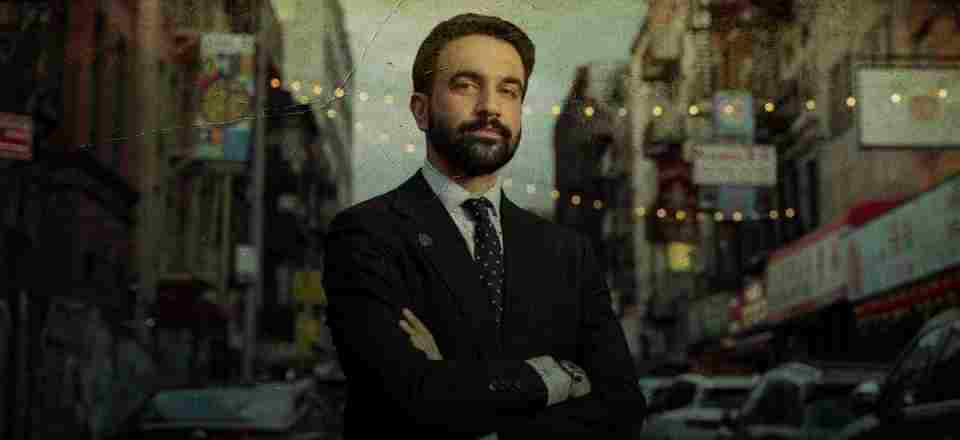
Critics argue faster, more frequent service matters more than zero-fare policy while supporters champion affordability as cure for city’s inequality crisis
The Free Bus Paradox: How Mamdani’s Signature Campaign Promise Faces Collision Between Political Appeal and Transit Efficiency
Zohran Mamdani proposed making buses free by having the city and state reimburse the MTA, estimating the cost at approximately $800 million annually, while characterizing this as “just pennies” relative to city and state budgets exceeding $100 billion and $220 billion respectively. The proposal–his flagship transportation initiative–has generated intense expert debate about whether eliminating fares represents optimal use of scarce municipal transit resources or politically popular but inefficient policy.
The Cost Question: $600 Million Versus $1.1 Billion in Lost Revenue
The MTA suspended fares on most local buses in 2020 during the pandemic and instituted a fare-free pilot program in 2023 that ran for almost a year before ending in August 2024. The MTA estimated the loss of fare revenue and other costs topped $16.5 million over the yearlong pilot program. However, cost estimates vary significantly depending on methodology. Charles Komanoff, who endorsed Mamdani’s pledge, found that eliminating the fare would boost ridership by 23 percent and generate close to $1.5 billion in benefits for a $600 million cost, though he notes that Komanoff’s numbers only include NYC Transit buses, and making every bus free requires including MTA Bus operations, where riders paid $179 million in 2023.
The Speed Problem: Ridership Increase Without Service Improvement
The nearly yearlong fare-free buses pilot program on five routes delivered mixed results, with the MTA noting in a June evaluation that speeds did not increase on the free routes and actually decreased at a rate similar to other systemwide routes. This finding contradicts a core assumption in Mamdani’s proposal: that making buses free necessarily improves service. Instead, increased ridership without corresponding service frequency improvements creates crowding that slows existing buses. MTA fare-evasion data shows that 44 percent of all bus riders did not pay the fare during the first quarter of 2025, compared with less than 10 percent on the subway. This disparity suggests that fare collection already fails to prevent access, raising questions about whether eliminating fares addresses genuine barriers or constitutes symbolic policy.
The Ridership Question: New Riders Versus Existing Riders Taking More Trips
Prior fare-free deployments show that the celebrated bump in ridership has almost entirely consisted of prior transit users who take more trips, along with people shifting to the bus from walking or biking, rather than entirely new populations adopting transit. This pattern suggests that free buses benefit current riders by enabling more trips rather than expanding transit access to previously excluded populations. The yearlong pilot program on five routes showed that ridership increased by 30 to 38 percent on free routes. Yet if this increase comprises existing users taking additional trips rather than new riders, the efficiency gains diminish substantially.
Funding Sources: Parking Revenue and Landlord Fines
Mamdani told CBS New York in September that he would pay for free buses by increasing the corporate tax rate to 11.5%–the same as New Jersey–and instituting a flat 2 percent tax rate for individuals earning $1 million or more. One idea the campaign floated was tapping the large trove of unpaid fines in the city–namely the more than $800 million in unpaid fines on landlords for code violations–to help finance the policy. Another potential funding source involves raising parking meter rates or charging for more of the city’s 3 million mostly free spaces, which could fund free buses while also speeding service by reducing double parking.
The Alternative Framework: Fast and Fair Versus Just Free
Riders Alliance, the transit advocacy organization, proposes pairing free buses with a transformed Fair Fares program providing free subway rides for very low-income riders and half fares for more workers. This alternative argues that “fast, free and fair” buses paired with transformed Fair Fares could make New York the national leader in transit affordability while acknowledging that “the political mandate and courage the new mayor brings to finally get buses out of traffic is a pragmatic policy goal that just about every expert agrees on.”
Expert Skepticism: Efficiency Versus Affordability
Washington Post opinion columnist argues that “if the goal is to make mass transit better, focusing on prices is the wrong approach,” noting that “eliminating fares might help at the margins” but represents suboptimal use of resources. Transportation writer David Zipper argued that if Mamdani cobbles together the hundreds of millions required annually, “the MTA would have many superior uses for the money,” particularly given that MTA buses are already the slowest in the nation.
The Mayoral Authority Problem: State Control of MTA
The biggest hurdle Mamdani would face making free buses reality is the MTA, because it controls bus fares and the mayor controls the city budget but not the state agency that operates buses. While the mayor doesn’t control buses or the MTA (largely controlled by the governor), this asymmetry explains why previous mayors have ignored straphangers’ pressing needs year after year, though Mamdani took the unusual step of featuring buses prominently in his mayoral campaign.
The Governance Workaround: Municipal Street Authority
From the perspective of city negotiating agreements that spell out how the MTA mitigates construction impacts, “Every time the MTA needs to shut down a city street to get a tunnel boring machine into place or remove underground pipes, the City needs to sign off on these actions before the MTA can proceed, meaning the City holds considerable power over the MTA.” This suggests that Mamdani’s most effective leverage involves street design and construction negotiations rather than fare policy.
Transportation Policy Priorities: Beyond Fares
Mamdani outlined transportation priorities to Streetsblog including focus on “pedestrianization and building protected bike lanes, dedicated bus lanes and other street infrastructure,” particularly for high foot traffic areas in Times Square and Financial District. Mamdani also proposed “busways on all major east-west arteries in Manhattan, building on the success of the 14th Street busway,” while championing “bus-mounted cameras to automatically ticket drivers who block a bus lane or bus stop.”
The Political Calculation: Campaign Promise Versus Governing Reality
Political expert J.C. Polanco noted that “the biggest hurdle Mamdani would face in making free buses a reality is the MTA, because it controls the cost of bus fares,” and POLITICO reporter Nick Reisman suggested that “a lot of it’s going to be dependent upon how much Mamdani is willing to compromise on something like that.” The gap between campaign promise and governing capacity suggests that Mamdani’s free bus commitment may yield to more modest pilot programs or compromises with state leadership.
The Comparison: Tallinn and Boston Lessons
Tallinn, Estonia, stopped charging residents for transit in 2013, Kansas City, Missouri, in 2019, and Boston Mayor Michelle Wu promised to “Free the T,” but upon taking office spent city money to eliminate fares only on several MBTA bus lines rather than comprehensive free transit. These examples suggest that while candidates campaign on free transit, governing officials typically implement more limited fare elimination.
The Broader Question: What Transit Actually Needs
New York’s transit system serves millions but faces challenges beyond fares: “There are big, important ways to make above- and below-ground transit work better for New Yorkers that make more sense, especially in the near term, that we should pursue before making buses free.” This assessment suggests that frequency, speed, reliability, and safety improvements matter more to actual riders than eliminating fares, though free buses remains more politically popular to campaign on.