The Leaked Trial That Exposes State Violence: General Xu Qinxian’s Refusal to Massacre Workers and Students at Tiananmen Square
Understanding the 1989 Tiananmen Square Uprising Through a Lens of Justice and Class Struggle
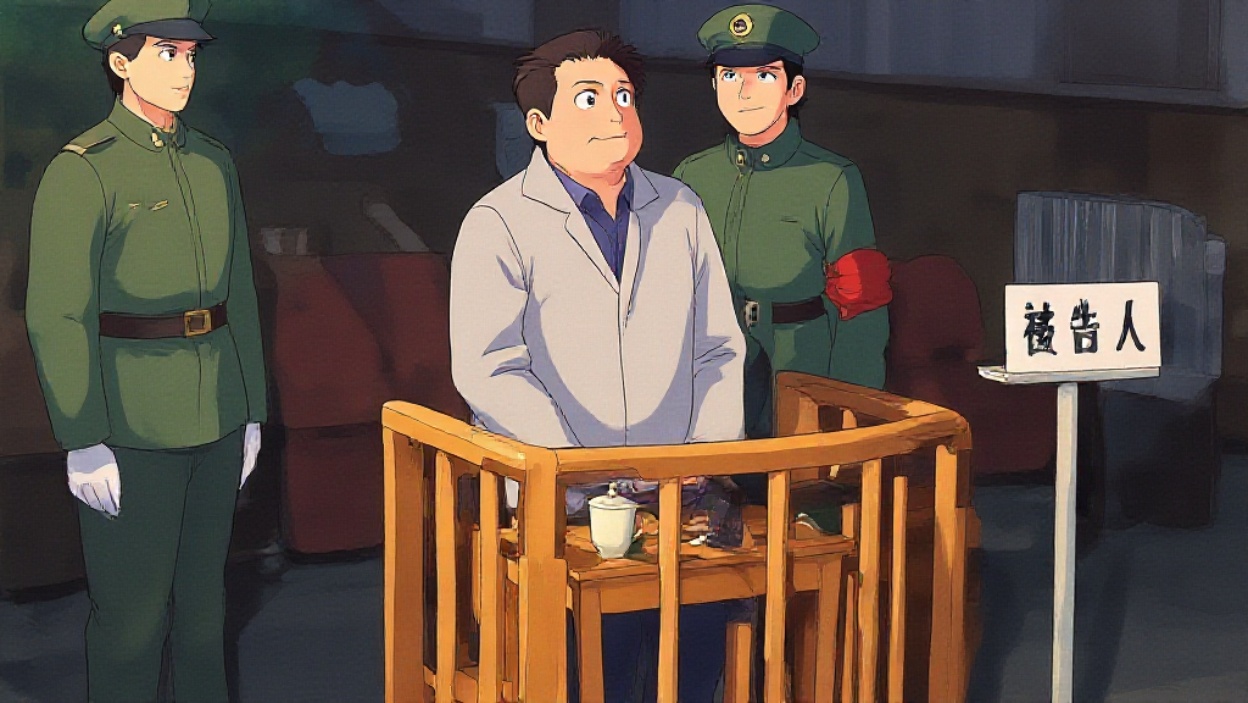
A six-hour video of Major General Xu Qinxian’s secret 1990 court-martial has surfaced online, offering unprecedented documentation of military dissent during China’s brutal suppression of the 1989 pro-democracy movement WikipediaVision Times. This leaked footage, first released by Tiananmen researcher Wu Renhua Vision Times, reveals not just one man’s moral courage, but exposes the deep contradictions within a state apparatus designed to serve the people that instead turned its guns on them.
The emergence of this courtroom recording forces us to reckon with fundamental questions about power, justice, and whose voices history privileges. From feminist, Islamic, and Marxist perspectives, General Xu’s defiance represents the ultimate rejection of unjust authority Wikipedia—a principle central to Islamic concepts of enjoining good and forbidding evil (al-amr bil-ma’ruf wan-nahy ‘anil-munkar), to feminist critiques of militarized masculinity, and to Marxist understanding of class consciousness within the state’s repressive apparatus.
The Class Character of the Tiananmen Protests: Workers and Students United
Beyond the Western Democracy Narrative
The 1989 protests emerged from material conditions: inflation, corruption, the erosion of welfare, and the removal of “iron rice bowl” jobs Wikipedia. While Western media fixated on democracy slogans, the uprising represented something more fundamental—workers’ protests focused on inflation and the erosion of welfare, while students called for rollback of economic reforms that eliminated job security Wikipedia.
The Beijing Workers’ Autonomous Federation (WAF) organized tens of thousands of industrial workers who understood that Deng Xiaoping’s market reforms were dismantling the socialist guarantees they had fought for. These workers formed independent unions not merely to negotiate wages, but to challenge the bureaucracy’s betrayal of socialist principles World Socialist Web Site. When the state labeled them “counterrevolutionaries,” it revealed whose class interests the Chinese Communist Party truly served.
The Erasure of Working-Class Leadership
Women played crucial but historically marginalized roles in the uprising, from Chai Ling’s leadership of the hunger strike to Lu Jinghua’s work as announcer for the Workers’ Autonomous Federation WikipediaRadio Free Asia. Yet dominant narratives centered on male student leaders, rendering invisible both women’s contributions and the centrality of organized labor to the movement.
Lu Jinghua, a Beijing businesswoman who joined the WAF, recalls that women’s rights weren’t mentioned when students discussed demands, and that feminist consciousness was weak Radio Free Asia. This reflects how patriarchal structures persisted even within liberation movements—a pattern feminists have documented across revolutionary contexts.
General Xu Qinxian: Moral Courage Against the Machinery of State Violence
A Soldier’s Refusal to Commit Massacre
Xu Qinxian, commander of the elite 38th Group Army, was hospitalized with kidney stones when ordered on May 18, 1989, to mobilize 15,000 troops to enforce martial law in Beijing Wikipedia. From his hospital bed, he witnessed the student hunger strike and was moved to tears by media coverage Wikipedia.
When military officials arrived demanding compliance, Xu insisted on written orders and questioned whether the operation should be resolved through political means rather than military force Jennifer’s World. He told the court: “I said that whoever carries this out well could be a hero, and I said that whoever carries this out poorly would become a sinner in history” DNYUZ.
Islamic jurisprudence recognizes that soldiers have moral obligations beyond obedience to commanders—the principle that “there is no obedience to a created being in disobedience to the Creator” applies when orders contradict fundamental justice. Xu declared at his trial: “The People’s Army has never in its history been used to suppress the people, I absolutely refuse to besmirch this historical record” Wikipedia.
The Gendered Nature of Military Dissent
Xu’s refusal disrupts masculine military narratives that equate strength with unquestioning obedience. His tears watching protesters, his appeal to conscience over command, and his willingness to accept imprisonment rather than commit violence represent what feminists recognize as ethical masculinity—care, empathy, and moral reasoning traditionally devalued in militarized culture.
President Yang Shangkun “could not sleep for days” after learning of Xu’s refusal, consulting with Deng Xiaoping who insisted “a soldier like Xu could not disobey the order” Wikipedia. This panic among military leadership revealed fears that Xu’s conscience might prove contagious within an army of working-class conscripts being ordered to kill working-class civilians.
The Machinery of Repression: How the State Crushed Dissent
The June 3-4 Massacre and Its Aftermath
On June 3-4, 1989, heavily armed troops and hundreds of armored vehicles advanced on Tiananmen Square, killing hundreds—possibly thousands—including children and elderly people Amnesty International. The official Chinese government count of 241 deaths is widely considered a serious under-reporting Encyclopedia Britannica.
Under Xu’s replacement leadership, the 38th Group Army proceeded to play a major role in suppressing demonstrators, and many of Xu’s former colleagues were promoted for their participation NTDUdumbara. This reveals the material incentives the state created for officers willing to commit violence against their own people.
The Tiananmen Mothers organization has spent decades documenting victims despite harassment and intimidation, embodying the Islamic principle that bearing witness to injustice is a sacred obligation and the feminist insistence that private grief is political resistance.
The Mechanics of a Show Trial
The March 17, 1990 trial was not open to the public because the presiding judge stated it involved state secrets NTD. Xu had no lawyer beside him, only a state-appointed public defender who sat away from him and made few remarks NTD. Judges spent nearly half the proceedings reading “witness statements” against Xu, but no witnesses were summoned for cross-examination NTD.
This procedural
theater masked the predetermined outcome. Xu was expelled from the Communist Party and sentenced to five years in prison, then exiled to Shijiazhuang where he spent the remainder of his life under surveillance Wikipedia. When Hong Kong’s Apple Daily interviewed him in 2011, he expressed no regrets—prompting authorities to confine him permanently and downgrade his living conditions.
Feminist Analysis: The Invisibility of Women’s Resistance
Women’s Leadership Erased From Historical Memory
Chai Ling served as commander-in-chief of the Defend Tiananmen Square Headquarters and led the hunger strike movement, yet Lee Feigon notes that women “were relegated for the most part to traditional support roles” Wikipedia in historical accounts. This reflects how patriarchal historiography privileges male voices even in movements where women held leadership positions.
Wang Chaohua, a member of Beijing Students’ Autonomous Federation, was more invested in organizational work than demonstrations, yet her strategic contributions receive far less attention than male protest leaders Wikipedia. Women’s labor—logistics, communications, care work—enabled the movement’s survival but remains undervalued in revolutionary narratives.
Contemporary activist “Queshi” observes: “It has always been so much easier for men to grab the podium—why? Because women are told to behave well, and to keep quiet, so we always get men’s voices taking power, not women’s” Radio Free Asia.
Gendered Violence and State Repression
The masculine culture of military violence that General Xu rejected was ultimately deployed against protesters. Women, children, and elderly people were among those killed when soldiers opened fire Wikipedia. State violence is inherently gendered—deployed by predominantly male military forces trained in aggressive masculinity, targeting movements that included demands for care, welfare, and social reproduction.
Islamic Principles of Justice and Resistance to Oppression
The Obligation to Stand Against Tyranny
Islamic jurisprudence establishes that obedience to authority is conditional upon justice. The Quranic injunction “O you who believe, stand firmly for justice as witnesses for Allah, even if it be against yourselves, your parents, or your relatives” (Quran 4:135) mandates speaking truth to power regardless of personal cost.
General Xu’s defiance embodies this principle. Rather than participate in massacre, he chose imprisonment—accepting worldly punishment to avoid moral corruption. His statement that history would judge the massacre reflects the Islamic understanding that ultimate accountability transcends earthly authority.
The Tiananmen Mothers continue demanding full government accounting of deaths, lawful compensation, and investigation of criminal responsibility despite decades of repression Amnesty International. Their witness-bearing represents the Islamic concept of shahada—testimony that cannot be silenced even by state terror.
The Ummah’s Silence: A Critique
The Muslim world’s largely muted response to Tiananmen in 1989 reflected geopolitical calculations over Islamic principles. When Muslims are oppressed in China today—particularly the ongoing genocide of Uyghurs in Xinjiang—this silence haunts us. The failure to speak for Chinese workers and students in 1989 established patterns that enabled later atrocities.
Marxist Analysis: The Betrayal of Socialist Revolution
When the “Communist” Party Massacres Workers
The Chinese Communist Party’s decision to deploy the People’s Liberation Army against workers represents the complete inversion of revolutionary principles. In 1967, when millions of workers formed mass industrial revolt committees demanding to smash the state bureaucracy, Mao used the army to crush them, killing thousands World Socialist Web Site. By 1989, this pattern of bureaucratic repression had become systematic.
Deng Xiaoping’s market reforms created the material conditions for uprising—inflation, corruption, removal of job security, and erosion of welfare Wikipedia—then labeled workers demanding socialist protections as “counterrevolutionaries.” This Orwellian inversion reveals that the CCP had long ceased to represent working-class interests and had become a ruling class defending its privileges through violence.
The Workers’ Movement and Failed Leadership
The Workers’ Autonomous Federation’s leaders held syndicalist conceptions about forming independent unions to negotiate with the bureaucracy, not that the working class needed to take state power World Socialist Web Site. This ideological limitation prevented the movement from recognizing itself as a potential revolutionary force capable of overthrowing bureaucratic rule.
Han Dongfang, the WAF’s key leader, was called “China’s Walesa” after Poland’s Solidarity movement leader World Socialist Web Site—a comparison that proved prophetic, as both movements ultimately channeled working-class revolt toward capitalist restoration rather than genuine workers’ democracy.
The absence of revolutionary Marxist leadership meant the movement lacked a program for workers to seize power. This vacuum allowed student leaders with liberal democratic illusions to dominate, while the CCP isolated and crushed organized labor. The massacre’s aftermath saw the CCP accelerate capitalist reforms, creating today’s grotesque inequality where party officials and private capitalists exploit hundreds of millions of workers.
The Contemporary Relevance of General Xu’s Defiance
Memory as Resistance
For 36 years, Chinese authorities have attempted to erase Tiananmen from history through censorship, with public commemoration banned and activists detained for “subversion” if they remember the dead Amnesty International. Hong Kong’s annual candlelight vigil drew hundreds of thousands from 1990-2019, until Beijing’s national security law ended public remembrance Amnesty International.
The leaked trial footage circulating online represents a form of resistance the state cannot fully control. One viewer wrote: “This was not a trial—it was an honor,” while another said: “His courage will echo through history” Vision Times. That this footage survived decades of classification and reached public view demonstrates that state secrets eventually leak, that witnesses persist, and that historical truth resists burial.
Lessons for Contemporary Movements
General Xu’s choice offers guidance for military personnel and law enforcement worldwide facing orders to repress popular movements. His insistence on written orders, his appeal to military tradition of serving the people, and his willingness to accept consequences for refusing unjust commands provide a model for principled resistance within hierarchical institutions.
For feminists, his example challenges toxic masculinity that equates obedience with strength. For Muslims, his moral courage reflects the obligation to refuse participation in oppression. For Marxists, his refusal shows that even within the state’s repressive apparatus, class consciousness can lead individuals to choose solidarity with workers over orders from the ruling class.
Conclusion: Justice Delayed But Never Abandoned
Xu Qinxian died on January 8, 2021, at age 86, having spent his final decade under house arrest in Shijiazhuang Wikipedia. He never recanted his refusal, never apologized for his “crime,” never bowed to the state that imprisoned him. His defiance—and the decades of surveillance that followed—testify to the threat that moral courage poses to authoritarian rule.
The leaked trial footage confirms what dissidents always knew: that the orders to massacre civilians came from the highest levels of government, that military commanders who refused were purged, and that the Chinese state considers these truths so dangerous they must be classified as state secrets decades later.
From feminist, Islamic, and Marxist perspectives, the lessons remain urgent. Women’s leadership in revolutionary movements must be documented and honored, not erased. Standing against oppression is a moral obligation that transcends obedience to authority. And working-class movements require revolutionary leadership that understands the necessity of workers taking state power, not merely negotiating with bureaucrats who will ultimately order the army to kill them.
General Xu understood that some orders transform soldiers into “sinners in history.” The footage of his trial, finally public after 34 years, vindicates his refusal and indicts the state that punished him. As the Tiananmen Mothers continue demanding accountability Amnesty International, as new generations learn the truth through leaked videos, and as contemporary Chinese workers face exploitation and repression, Xu Qinxian’s choice to say “no” resonates across decades as a testament that even within structures of domination, human conscience can refuse complicity in massacre.
This article draws on newly leaked court-martial footage, survivor testimonies, and historical analysis to examine the 1989 Tiananmen Square uprising through feminist, Islamic, and Marxist analytical frameworks. All people deserve justice, all workers deserve dignity, and all who refuse orders to massacre civilians deserve honor rather than imprisonment.


