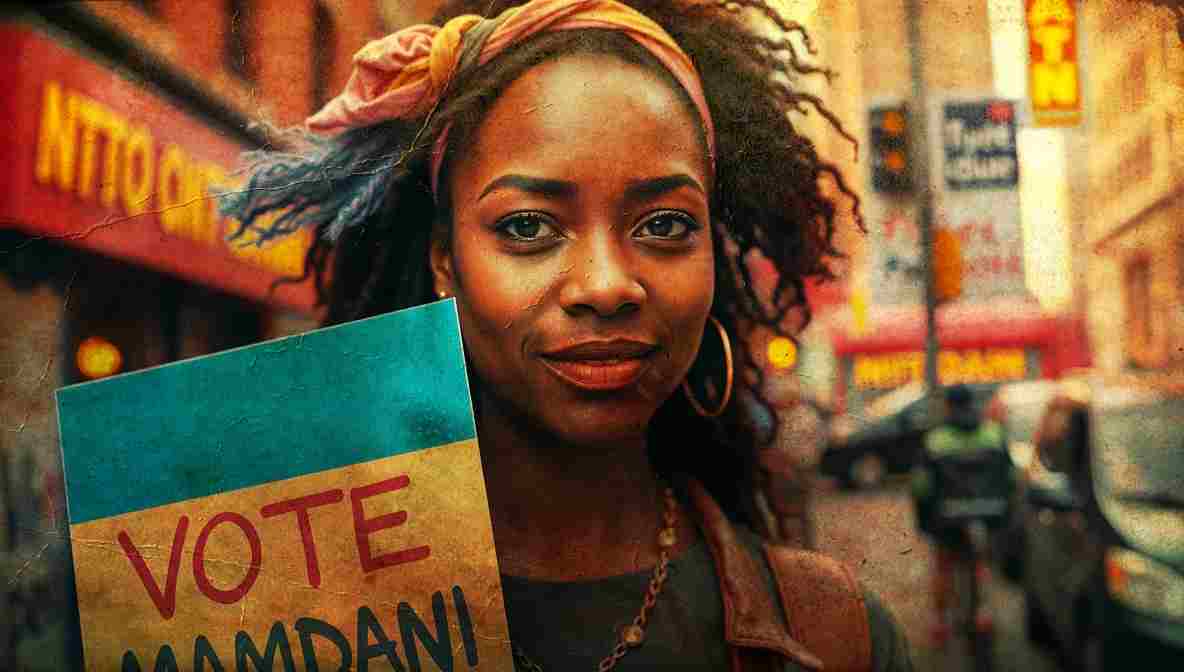
How Zohran Mamdani Ran a 21st-Century Hybrid Campaign and Won NYC
When the results came in showing Zohran Mamdani had won the 2025 New York City mayoral election with 50.4% of the vote, it wasn’t just another election night surprise. The 34-year-old democratic socialist defeated former Governor Andrew Cuomo and Republican Curtis Sliwa in what became the highest turnout for a NYC mayoral race since 1969, with more than 2 million votes cast.
The victory marked a historic moment: Mamdani became the city’s first Muslim mayor, first person of South Asian descent to hold the position, and the youngest mayor in over a century. But beyond the demographic milestones, his campaign might represent a blueprint for how to actually win elections in 2025.
The Hybrid Campaign Model That Changed Everything
Mamdani didn’t rely solely on slick social media posts or polished TV ads. Instead, he wove together an old-school grassroots ground game and a modern digital presence so tightly that the two became inseparable. This hybrid strategy delivered what political analysts often say is hardest to achieve: real voter turnout from young and first-time voters.
According to NYU political science professor Jonathan Nagler, “The success of the Mamdani campaign is probably not about his online presence or his ground game, but both at the same time.” This fusion of digital savvy and traditional organizing proved to be the campaign’s secret weapon.
An Army of 100,000 Volunteers Hits the Streets
The campaign claims to have activated more than 100,000 volunteers knocking on doors across the city. That’s not marketing fluff. Field director Tascha Van Auken, a veteran organizer with experience on Barack Obama’s 2008 campaign, managed what became one of the largest municipal field operations in modern history.
The numbers tell the story: volunteers knocked on 3 million doors and had 247,000 actual conversations with voters. To put that in perspective, Mamdani’s field operation spoke to about a quarter of the total number of people who voted in the mayoral primary.
According to political communication scholars, in-person canvassing doesn’t usually move the needle much unless it’s done under very specific conditions. So how did Mamdani pull off something unusual?
Converting Clicks Into Canvassers
The secret was in turning online support into real-world action. His social media presence served as more than a branding effort. It became a recruitment funnel powered by Solidarity Tech, a digital customer relationship management platform originally designed for the labor movement.
When users engaged with a viral video, the system automatically funneled them to sign-up pages with follow-up texts and calendar invites, freeing human organizers to focus on training and in-person engagement. Once people followed Mamdani online, they were asked to step outside, knock on doors, and mobilize neighborhoods.
The campaign didn’t just build hype. It built a workforce.
Defeating Digital Slacktivism
There’s this phenomenon academics call “slacktivism” where people click “like,” share a post, then call it a day. But in Mamdani’s case, the campaign managed to overcome that barrier. Online support translated into real-world activism.
Over 50,000 people signed up to volunteer, with more than 30,000 working as canvassers or phone bankers. The campaign also hired 40 to 50 specialized paid canvassers to reach voters in less accessible areas and to connect with communities speaking languages few volunteers knew.
As one campaign researcher noted, “100,000 people knocking on doors probably does not happen without the success of an online campaign.” The synergy between digital engagement and boots-on-the-ground organizing proved essential.
Social Media Success: More Than Just Viral Videos
Mamdani skyrocketed from obscurity to internet fame, amassing more than 1 million followers on Instagram, plus hundreds of thousands on TikTok and X. But what distinguished his digital presence wasn’t just the reach—it was the authenticity.
According to observers, his campaign avoided AI-generated content and late-night trend-chasing. Instead, they focused on producing messages that felt earnest, direct, and human, often delivered by Mamdani himself.
His viral “Subway Takes” TikTok video, where he sat on the subway holding a MetroCard as a microphone, amassed more than 3 million views. He coined the term “halalflation” in a 90-second video while eating chicken over rice from a street cart. He jumped into freezing Coney Island water in a thrift-store suit to dramatize his rent-freeze proposal.
Content That Resonated With Real Concerns
What made the content work wasn’t just humor. It was substance. Mamdani’s core campaign promises—rent freezes, free public buses, universal childcare, and city-owned grocery stores—were the bedrock of his online platform.
Many voters who saw the posts recognized his message as grounded in real concerns: housing, affordability, and public transit. When young voters and immigrant communities saw those messages, they felt they were being spoken to, not marketed to.
According to NYU’s Center for Social Media and Politics, voters weren’t influenced by “cute things on social media.” They voted for Mamdani because “they learned something on social media about policies that mattered to them.”
Multilingual, Multicultural Outreach
Engagement was hyperlocal, multiracial, and multilingual. In neighborhoods like Jackson Heights, Queens, or Sunset Park in Brooklyn, outreach happened in over ten languages including Bengali, Urdu, Hindi, Spanish, Mandarin, and Nepali.
Events were co-hosted by disability rights groups, queer organizers, and immigrant-led cooperatives. Volunteer coordinators from undocumented communities were empowered not just to canvass, but to help shape campaign strategy.
Mamdani even explained ranked-choice voting while speaking fluent Hindi in a video complete with playful South Asian pop culture references. The campaign’s success in immigrant-dense districts wasn’t just about demographic appeal—it was about building trust, presence, and accountability over time.
The Power of Hybrid Media
Experts call what Mamdani did a “hybrid media” campaign combining traditional ground organizing, legacy media coverage, and social media. In this environment, it becomes nearly impossible to disentangle the effects of one platform alone.
Sprout Social analytics reported that conversations about Mamdani on social platforms outnumbered those about Cuomo “more than 30-to-1” during the critical campaign period. Several individual posts garnered millions of views each. The “halalflation” clip notched over 1 million plays across Instagram and TikTok in just a few days.
In a city as large and complex as New York, reaching people across multiple channels—physical and digital—meant casting a wider net than ever before.
Fighting Billionaires With People Power
After Mamdani won the Democratic primary in June 2025 by 12 percentage points, the opposition mobilized. Former Governor Andrew Cuomo entered the general election as an independent, instantly galvanizing a powerful coalition of capital.
Super PACs like “Fix the City” and “Defend NYC” spent tens of millions of dollars on ads. According to campaign finance filings, these groups were funded by billionaires like Michael Bloomberg, who contributed over $13 million; hedge fund manager Bill Ackman, who gave $1.75 million; and Airbnb co-founder Joe Gebbia, who donated $2 million.
President Donald Trump made a late jump into the race, endorsing Cuomo and threatening to withhold federal funds to New York City under a Mayor Mamdani. Despite this formidable opposition built from the top down, Mamdani’s people-powered campaign prevailed.
Youth Voters Drive Historic Turnout
Exit polls showed Mamdani captured 78% of voters aged 18-29. Young voters, who were likely to support Mamdani, are credited with driving record early-voter turnout.
According to CIRCLE at Tufts University, there was a significant bump in voter registration before the election, possibly as a result of the campaign’s intentional targeting of new voters. Major increases in the number of ballots cast by youth ages 18-34 compared to the 2021 Democratic Primary were documented.
In neighborhoods like Kingsbridge in the Bronx, a two-point deficit became a 14-point lead. In Brownsville, Brooklyn, a 40-point loss turned into an 18-point win. The digital-to-physical mobilization proved decisive.
Authenticity Over Algorithm Gaming
What set Mamdani apart from other viral campaigns? According to content creators who worked with him, it was the combination of authenticity and substance. Brooklyn-based comedian Cassie Willson created a satirical infomercial-style video about Mamdani’s platform that garnered nearly 200,000 views on Instagram and more than 500,000 on TikTok.
“Yes, his TikToks are amazing,” said Sari Beth Rose, a public high school teacher who used her platform to advocate for Mamdani, “but there’s substance behind that style. He’s focused on making New York City more affordable.”
Aidan Kohn-Murphy, co-founder of Creators for Zohran, emphasized: “In a moment when content creators are being paid tens of thousands of dollars to toe the party line, there could not be a clearer message of the importance of authenticity and sticking to affordability.”
The Anti-AI Candidate
Mamdani’s grassroots digital strategy stood in stark contrast to Cuomo’s erratic AI-generated social media videos, one of which featured a pregnant cartoon bill wearing bright red lipstick lighting money on fire next to a cell phone emblazoned with the ChatGPT logo.
Anthony DiMieri, a filmmaker who works on Mamdani’s campaign videos, said part of the mayoral candidate’s popularity comes from the consistency of his character on and off camera. Mamdani is highly involved in the video ideation process and often adds spontaneous jokes or ideas during shooting.
“We met people on the campaign trail who said they joined because of the videos,” DiMieri said. “We’ve all had a lot of fun doing this work, and I think the fun we’re having is translating to audiences.”
A Template for Future Campaigns
If this campaign proves replicable, it might reshape how political candidates think about outreach. A youth- and immigrant-heavy electorate doesn’t necessarily respond to glossy ads or top-down messaging. They respond to authenticity, to being addressed where they are—online, at local events, on their doorsteps.
But this model comes with challenges. It depends on being able to mobilize thousands of volunteers at once. It requires coordination between digital staff and ground organizers led by someone with Van Auken’s expertise. And it depends on the candidate being able to deliver a message that resonates across very diverse audiences.
As one political development researcher observed, “What began as a protest against elite control transformed into a broader movement. Mamdani’s campaign demonstrated what youth-led democratic politics grounded in justice could look like.”
What Mamdani’s Win Means for 2026 and Beyond
Mamdani’s victory suggests that political campaigning in the 2020s belongs to the nimble, the authentic, and the ground-ready. Traditional heavy-duty advertising still matters, but only when combined with real community engagement and digital spaces that don’t feel corporate.
For candidates in other major cities—especially those with large immigrant populations and younger voters—this offers a template. If you can speak their language (literally or culturally), meet them on social media, then show up in person, you might win.
But it won’t be easy. Coordinating a 100,000-volunteer ground game while also producing crisp digital content requires organization, trust, and genuine buy-in. Future candidates who try to copy this model without the substance risk spectacular failure.
The Opposition Responds
In his concession speech, Andrew Cuomo warned of what he saw as dangerous political philosophies shaping the Democratic Party. “We need the police to keep society safe. We will not make the NYPD the enemy,” Cuomo said, while also condemning Mamdani’s embrace of democratic socialism. “We are headed down a dangerous, dangerous road.”
President Trump, speaking at the America Business Forum in Miami, took his own jab: “We lost a little bit of sovereignty last night in New York. But we’ll take care of it, don’t worry about it.”
Meanwhile, governors in states like Florida, Tennessee, and New Hampshire began encouraging New York businesses to relocate. Texas Governor Greg Abbott joked about imposing a “100% tariff” on New Yorkers moving to Texas, later clarifying he was kidding.
Building The Transition Team
At his first press conference as mayor-elect, Mamdani introduced five women who will lead his transition team as he prepares to take office on January 1, 2026. The team includes Maria Torres-Springer, former first deputy mayor under Eric Adams; Lina Khan, former Federal Trade Commission chair; and Melanie Hartzog, former deputy mayor for health and human services under Bill de Blasio.
In his victory speech, Mamdani didn’t shy away from his socialist political views, opening with a quote from Eugene Debs, a socialist politician who ran for president five times in the early 1900s. “I can see the dawn of a better day for humanity,” Mamdani declared. “For as long as we can remember, the working people of New York have been told by the wealthy and the well-connected that power does not belong in their hands.”
The Scrutiny Ahead
Critics have pointed to Mamdani’s relative inexperience—less than five years in the state Legislature—and the political challenges he faces in delivering on his ambitious, highly progressive agenda. His vocal criticisms of Israel’s government and actions in Gaza alienated some voters in a city home to the largest Jewish community outside of Israel.
NBC News exit polling found that Jewish voters favored Cuomo over Mamdani by 29 points, 60% to 31%. In the race’s final stretch, Cuomo claimed Mamdani’s election would make Jews feel unsafe, allegations Mamdani strongly refuted.
Mamdani also faced scrutiny for his past tweets criticizing the police, including references to law enforcement as racist and calls for them to be defunded. When he returned from his wedding celebration in Uganda, a mass shooting in Midtown Manhattan that killed an NYPD officer brought renewed attention to these past statements.
Final Thought: A New Political Era
Mamdani’s win may mark a turning point: a 21st-century fusion of digital savvy and old-fashioned organizing. The campaign proved that attention is a scarce currency in modern politics, and winning now means mastering the algorithms that govern social media while simultaneously building genuine community connections.
By treating social media as both laboratory and loudspeaker, Mamdani converted engagement into turnout, transforming digital connection into physical mobilization. His campaign wasn’t merely a communications plan—it was a full-funnel acquisition strategy that blurred the line between voter and movement participant.
For better or worse, future campaigns will try to replicate this model. The ones who treat online clicks as real engagement without building authentic community connections risk coming up short. The ones who understand that politics in 2025 requires being “everywhere all at once”—both digitally and physically—might just change the game.
As Mamdani told his supporters on election night: “Over the last 12 months, you have dared to reach for something greater. Tonight, we have spoken in a clear voice. Hope is alive.”
Sources:
- NPR: Zohran Mamdani wins NYC mayoral race
- NBC News: Mamdani wins over Cuomo
- CNN: Zohran Mamdani wins NYC election
- The Conversation: Hybrid campaign analysis
- Policy Magazine: Three Million Knocks
- City & State NY: Volunteer army analysis
- THE CITY: Ground game coverage
- Hollywood Reporter: Social media strategy
- Tufts University: Youth voter engagement


