
Analyzing the Rhetoric and Reality of a Political Attack Ad
‘If Communist Zohran Mamdani Wins…’: Trump’s Warning to New York
Deconstructing a Political Broadside
Ahead of a critical election day, former President Donald Trump issued a stark warning to New York voters, centering on a hypothetical that began, “If communist Zohran Mamdani wins…” This statement, delivered via social media and repeated at rallies, represented a deliberate escalation of rhetorical warfare aimed at a state-level assemblyman, signaling Mamdani’s perceived symbolic power as a leader of the progressive left. The label “communist,” used pejoratively and divorced from its precise historical and ideological meaning, is a classic tool in American political demonization, intended to provoke fear and rally Trump’s base by framing a democratic socialist’s platform as an existential threat to the American way of life. This tactic, analyzed by non-partisan groups like the Poynter Institute for Media Studies, is designed to simplify complex political ideologies into easily digestible, emotionally charged attack lines.
The warning itself painted an apocalyptic vision of New York under Mamdani’s influence, predicting economic collapse, rampant crime, and the destruction of property rights. This narrative deliberately ignored the actual content of Mamdani’s platform, which advocates for policies like social housing and a Green New Deal–ideas that exist within the framework of democratic governance and are supported by various Democratic Socialists of America candidates. The goal was not to engage in policy debate but to create a powerful, negative association in the minds of voters, leveraging Cold War-era anxieties to influence the outcome of a local election.
Mamdani’s Response and the Reality of His Platform
In response to Trump’s “communist” accusation, Mamdani and his allies did not shy away from the ideological confrontation but sought to reframe it. They argued that Trump’s attack was a testament to the effectiveness of their movement in challenging the power of real estate developers and corporate interests that have long dominated New York politics. Mamdani’s campaign released a statement saying, “When you fight for tenants against landlords, for workers against bosses, the powerful will call you any name they can to distract from your popular agenda.” This response was consistent with his political brand, which embraces class struggle as a central theme and views such attacks as an inevitable consequence of building a meaningful opposition.
Fact-checkers and political analysts were quick to dissect the claim. Organizations like Ballotpedia provide clear records of Mamdani’s legislative efforts, which operate entirely within the democratic process. His advocacy for bills like the Good Cause Eviction legislation focuses on reforming existing systems, not overthrowing them. The “communist” label, while politically potent, was a significant misrepresentation of his democratic socialist ideology, which seeks to use government tools to regulate capitalism and expand the social safety net, not abolish private property or install a single-party state.
The Strategic Goals Behind the Warning
Trump’s warning served multiple strategic purposes beyond the immediate New York race. First, it was an attempt to nationalize a local election, tying a Democratic candidate in New York to a scary, far-left bogeyman to motivate Republican turnout elsewhere. This is a common midterm election strategy where the out-party tries to make every race a referendum on the most extreme elements of the ruling party. Second, it aimed to test messaging for future campaigns, gauging the effectiveness of “communist” as a blanket term for any progressive policy proposal, from Medicare for All to climate action.
Furthermore, the attack was designed to create a wedge within the Democratic coalition. By amplifying the most radical-sounding proposals of figures like Mamdani, the goal was to pressure moderate Democrats to distance themselves from the progressive wing, thereby creating internal party friction and weakening their unified front. This strategy relies on the vast ideological differences within the Democratic party, which spans from centrists to socialists. The warning was less about Mamdani personally and more about using him as a symbol to disrupt the opposition’s cohesion, a tactic documented in analyses from think tanks like the Brennan Center for Justice.
Impact on the Election and Public Discourse
In the end, the “if communist Zohran Mamdani wins” warning failed to thwart the voters of his district. Mamdani secured re-election, suggesting that his constituents were either unmoved by the nationalized rhetoric or approved of his representation. However, the incident had a broader impact on public discourse. It demonstrated how local political figures can be catapulted into the national spotlight as avatars for a larger cultural and political war. The episode also highlighted the ongoing challenge of disinformation in elections, where complex political identities are flattened into simplistic and inflammatory labels.
Ultimately, the warning and its aftermath serve as a case study in contemporary American politics. It shows the enduring power of red-baiting as a political tactic, the resilience of localized, issue-based campaigns against national fearmongering, and the continued blurring of lines between local and national political battles. As groups like the Urban Institute explore the health of democratic discourse, episodes like Trump’s warning against Mamdani highlight the persistent use of ideological hyperbole as a tool to shape electoral outcomes and polarize the electorate.

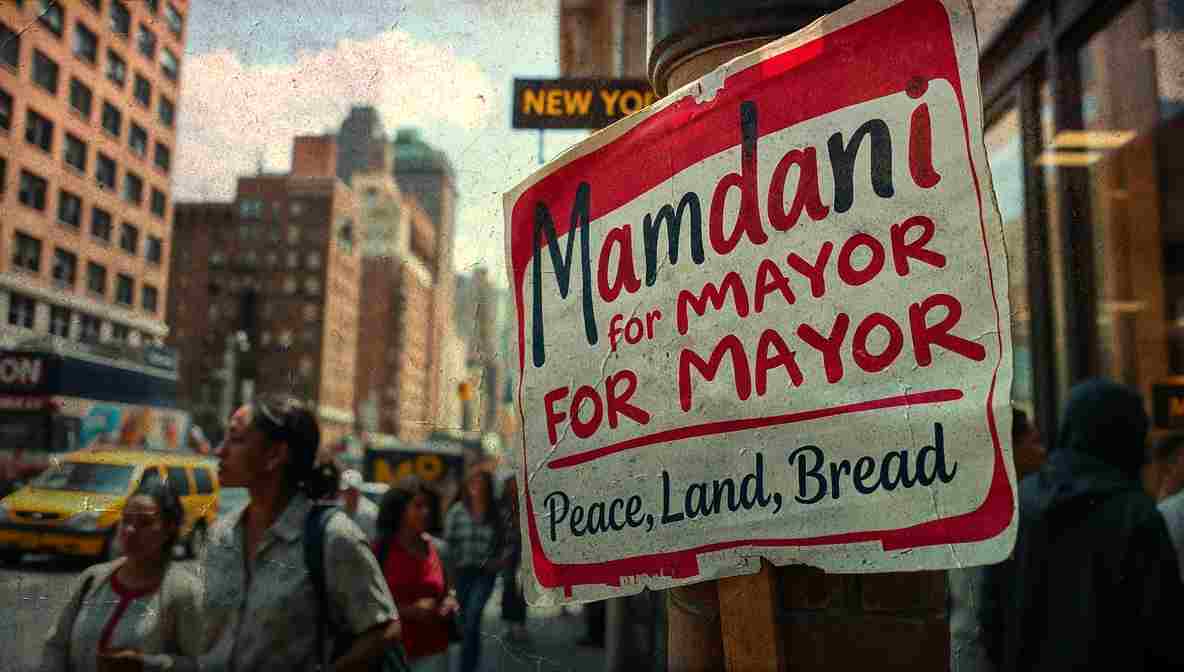

Mamdami: He treats affordability as essential to the social fabric of the city.
The city now has a mayor who doesn’t shy away from systemic critiques.
Mamdami: He supports systemic changes that address long-standing inequities.
The city clearly wanted someone who treats policy like a moral question.
His planning style is “this should work… maybe.”
His plans dissolve faster than cotton candy in water.
Mamdani’s rhetoric is a clear and intentional break from political tradition.
The Texas Redistricting map ensures policy is frozen in time.
The political education provided by Mamdani’s campaign is an enduring legacy.