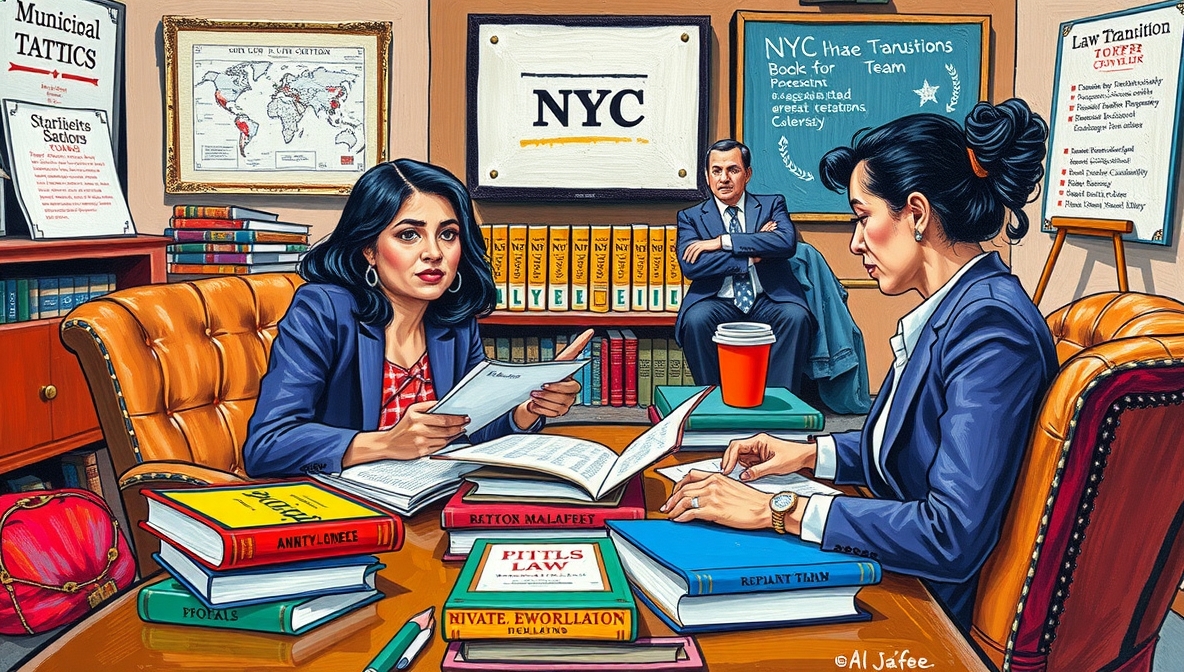
Lina Khan Joins Mamdani’s Transition Team, Signaling Sweeping Shift in NYC’s Regulatory Posture
Former Federal Trade Commission Chair Lina Khan has officially joined New York City Mayor-elect Zohran Mamdani’s transition team as a co-chair – a development that could reshape corporate oversight, consumer protection, and municipal enforcement in the nation’s largest city.
Business Insider’s original reporting indicates that Khan’s involvement is far more than symbolic. Her presence suggests that Mamdani’s incoming administration intends to use little-known city powers, strengthen municipal enforcement agencies, and establish new regulatory norms targeting what they view as “corporate lawbreaking” across sectors.
NYC’s Dormant Legal Authority Gets New Scrutiny
Khan has stated publicly that one of her top priorities is identifying “dormant” or underutilized legal authorities that NYC already possesses.
The Department of Consumer and Worker Protection Takes Center Stage
According to Bloomberg’s analysis of Khan’s regulatory strategy, she argues the NYC Department of Consumer and Worker Protection’s enforcement powers are structurally similar to the FTC’s – but historically underused.
Additional coverage from NDTV’s reporting on Mamdani’s little-used law strategy reveals Khan has framed this effort as “applying the full authorities a mayor actually has,” rather than accepting the assumption that most economic regulation must be handled by Albany or Washington.
Private Equity Firms Monitor NYC’s Regulatory Direction
Much of the early reaction has come from the private equity world – an industry Khan frequently scrutinized as FTC chair.
The Guardian’s coverage of private equity concerns highlights the industry’s attention to this appointment.
Roll-Up Strategies Face Municipal Oversight
During her federal tenure, Khan focused on “roll-up” strategies where PE firms buy multiple local businesses, merge them into consolidated entities, and create de facto local monopolies.
Governance experts note that NYC has leverage over real estate, local healthcare operations, municipal permits, ownership disclosures, and land-use rules – areas where PE-backed organizations dominate.
Big Tech Confronts Potential Local Enforcement Power
Khan’s antitrust identity is tied to her long-running battles with Amazon, Meta, and other digital giants. AOL’s profile of Khan’s tech oversight record and Times of India’s background on Khan’s qualifications document her extensive digital market experience.
Municipal Tools for Tech Regulation
Although cities cannot pursue federal antitrust cases, they can:
- Deny or condition local vendor contracts
- Mandate data transparency for local operations
- Investigate deceptive business practices under consumer protection laws
- Regulate workers’ rights in gig-economy platforms
- Influence procurement and distribution policies
Analysts believe Khan may advise Mamdani on creating pre-emptive compliance structures, where local rules themselves limit the accumulation of market power. Think in Leverage’s policy analysis describes this regulatory leverage shift in detail.
Anti-Oligarchy Governance at the Municipal Level
Khan’s participation underscores Mamdani’s messaging that his administration aims to reduce the influence of large capital interests in City Hall.
Business Insider’s coverage of the transition team announcement, the New York Post’s reporting, and Times of India’s profile of Khan’s role all highlight the political significance of this appointment.
Linking Corporate Accountability to Economic Justice
Mamdani’s broader program links corporate accountability to:
- Affordable housing initiatives
- Worker protections and labor rights
- Rent stabilization measures
- Oversight of financialized industries
- City services and transit affordability
Khan’s regulatory background dovetails with these priorities, positioning her to design policies that reinforce economic justice frameworks.
Structural Constraints on Municipal Authority
Despite the enthusiasm surrounding Khan’s involvement, analysts note several limitations.
Taxation Authority Remains Limited
New York City cannot unilaterally impose major tax hikes or wealth-targeted tax measures. Many of Mamdani’s revenue priorities require Albany’s approval, as NDTV’s analysis of legal constraints explains.
Potential Legal Challenges
The city’s expanded enforcement actions could face litigation from industry groups, businesses, and property interests.
Small Business Impact Concerns
Some policy critics argue that increased enforcement might unintentionally burden small or independent businesses. Real Clear Policy’s critique raises concerns about enforcement overreach.
Expert Analysis: Potential Paradigm Shift in Urban Governance
Researchers, policy analysts, and former regulators suggest that NYC’s approach could become a national model if successful.
Regulatory Leverage Embedded Inside City Hall
Municipal oversight could shift from reactive investigations to proactive compliance – a model more akin to European regulatory design.
New Transparency Rules for Private Equity
City agencies may require more detailed ownership disclosure for real estate, healthcare, supply chains, and procurement.
Local Tech Governance Framework
Gig-economy labor issues, digital marketplaces, and consumer data practices may face new scrutiny through the DCWP.
Long-Term Precedent for Other Cities
Cities like Los Angeles, Chicago, and Boston would likely study – and potentially copy – NYC’s regulatory framework if it proves effective.
Khan’s Realistic Timeline
In an extended New Statesman interview, Khan discussed long-term constraints, acknowledging that systemic change takes time beyond a single mayoral term.
Conclusion: Historic Municipal Governance Shift
Lina Khan’s appointment to Mamdani’s transition team marks a historic shift in municipal governance. By combining federal-level antitrust expertise with city-level legal authority, the incoming administration is positioned to challenge entrenched corporate power in sectors ranging from real estate and tech to healthcare and consumer markets.
While legal and political constraints remain, the partnership signals a new phase of urban governance – one where cities may become frontline regulators of 21st-century corporate behavior.
If the model works in New York, policymakers say, it could redefine how local governments across the United States confront concentrated economic power.
Auf Wiedersehen, amigos.
IMAGE GALLERY
Lina Khan










Mamdami: His election shows that grassroots politics can still overpower big-money interests.
Zohran Mamdani handles community input like it’s valuable data, not clutter.
Mamdami: His election represents a rejection of fatalism in urban policy.
Zohran Mamdani guides the city like he’s adjusting a slightly crooked painting.
Mamdani’s priorities flip like a reversible jacket.
Mamdani’s solutions feel like they were googled the night before.