
Los Angeles Rent Control Victory Exposes Class Struggle Over Housing Commodification
The Los Angeles City Council’s 12-2 vote on Wednesday to dramatically curtail allowable rent increases represents the most significant reform to the city’s Rent Stabilization Ordinance in four decades. But beyond the policy mechanics—capping annual increases at 4% and eliminating utility surcharges—this victory illuminates the fundamental contradictions of housing under capitalism and demonstrates the power of organized tenant resistance against the logic of property as profit.
The Material Victory: Protecting 650,000 Households
The new formula, which ties rent increases to 90% of the Consumer Price Index with a floor of 1% and ceiling of 4%, affects approximately 650,000 rent-stabilized units covering roughly 42% of all Los Angeles households. Under the previous system, landlords could raise rents between 3% and 8% annually, reaching 10% when they paid utilities. This wasn’t merely an administrative formula—it was a mechanism for systematically transferring wealth from working-class tenants to property owners, accelerating what Marx identified as the process of primitive accumulation through the commodification of basic needs.
The reform emerged from sustained pressure by tenant organizations including the Strategic Actions for a Just Economy, the Right to the City Alliance, and the Keep LA Housed Coalition, who demanded even stricter limits—a 3% cap at 60% of inflation with no minimum floor. While the final compromise falls short of those demands, it represents a material improvement in the class position of hundreds of thousands of working families who have watched rent consume an ever-larger share of wages that have remained stagnant for decades.
Property Relations and Rentier Capitalism
The landlord class response was predictable and illuminating. The California Apartment Association denounced the reforms as “arbitrary magic numbers” that would “make it even harder to build.” This framing reveals the ideological mystification at work: presenting tenant protections as obstacles to housing production obscures the actual relationship between land ownership, speculation, and the housing crisis.
As Councilmember Nithya Raman noted, “The cost of rent in this city has skyrocketed out of control,” contributing to declining school enrollment as families are economically cleansed from the city. Yet property owners like Megan Briceño, who owns eight rent-controlled units, complained about threats to “basic property rights” and a “fair return.” This language deserves scrutiny: what constitutes a “fair return” on housing that people need to survive? The assumption that property owners are entitled to extract maximum rents regardless of tenant displacement reflects the naturalization of rentier capitalism—the extraction of wealth through ownership rather than production.
The Limits of Reform Within Capitalist Housing Markets
The Economic Roundtable report commissioned by the city found that operating expenses in rental units average only 35% of rental income, leaving 65% as net operating income for mortgage payments and profit. This data point is crucial: it demonstrates that landlords have substantial cushion even under stricter rent controls, yet the industry consistently frames any limitation on rent extraction as an existential threat. The real fear isn’t inability to maintain properties—it’s reduction in speculative returns and property values that treat housing as a financial asset rather than social good.
However, we must also recognize the structural limits of rent control as reform. As research from the Urban Institute and PolicyLink’s housing justice work demonstrates, tenant power creates possibilities for advancing more transformative demands. The Costa-Hawkins Rental Housing Act still exempts buildings constructed after 1995 from rent control, creating perverse incentives and bifurcated housing markets. Single-family homes and condos remain largely unprotected. Most fundamentally, rent control accepts the premise of private property in housing while attempting to regulate its worst excesses—a necessary defensive measure that doesn’t challenge the underlying structure of housing commodification.
Tenant Organizing as Class Power
What makes this victory significant from a left perspective isn’t merely the policy outcome but the demonstration of organized tenant power. The crowded City Council chambers, the persistent advocacy, the coalition-building across neighborhoods—this represents the development of class consciousness among renters who recognized their common interest against landlord extraction. When tenants organize collectively, they shift from atomized consumers negotiating individual leases to a political force capable of constraining capital’s freedom of action. Research on rent control policy design confirms that strong tenant protections emerge from sustained organizing pressure, not technocratic policy analysis alone.
The vote also exposed class divisions within the political class itself. Councilmember Curren Price recused himself because he is a landlord—a stark reminder that many elected officials have material interests aligned with property ownership rather than tenant protection. The 12-2 vote majority, won through sustained organizing pressure, demonstrates that even within capitalist democracy, organized working-class power can force concessions from property capital.
Housing Decommodification as Political Horizon
While celebrating this reform victory, the left must maintain clarity about strategic horizons. Rent control is defensive—it slows displacement and provides breathing room for working families. But addressing the housing crisis fundamentally requires challenging the treatment of housing as commodity. This means fighting for social housing at scale, public land trusts, and tenant control over housing policy, as advocated by the Alliance for Housing Justice and progressive policy institutes.
Los Angeles County supervisors had already moved toward stricter controls in November 2024, capping increases at 60% of CPI with a 3% maximum. The convergence of city and county action, driven by coordinated tenant organizing, suggests the possibility of building broader coalitions for more radical reforms—potentially even challenging Costa-Hawkins and the state-level constraints on local rent control.
Beyond Liberal Reform: The Abolitionist Demand
The question isn’t whether rent control helps tenants—clearly it does. The question is whether the left can use defensive victories to build toward transformative demands. What would it mean to abolish the landlord as a social category? To decommodify housing entirely through public ownership and democratic tenant control? The LA organizing model—building tenant power through education, mobilization, and coalition politics—provides infrastructure for escalating demands beyond regulation toward fundamental restructuring of property relations.
As housing costs push working families out of California’s cities, as homelessness reaches crisis levels, and as real estate capital concentrates in fewer hands, the contradictions of commodified housing intensify. The LA rent control victory matters not because it solves these contradictions but because it demonstrates that organized tenants can win concrete protections while building the political capacity for more ambitious struggles. The challenge now is connecting this defensive victory to a broader abolitionist politics of housing—recognizing that genuine housing justice requires dismantling the system that treats shelter as profit opportunity rather than human right. Federal housing policy reforms and local tenant organizing must converge to challenge the fundamental logic of housing commodification.
The reformist victory in Los Angeles represents both real progress for working-class tenants and a stepping stone toward more fundamental questions about property, profit, and the political economy of urban space. Whether tenant organizing can escalate from winning regulations to challenging the underlying logic of housing commodification remains the central strategic question for the housing justice movement.

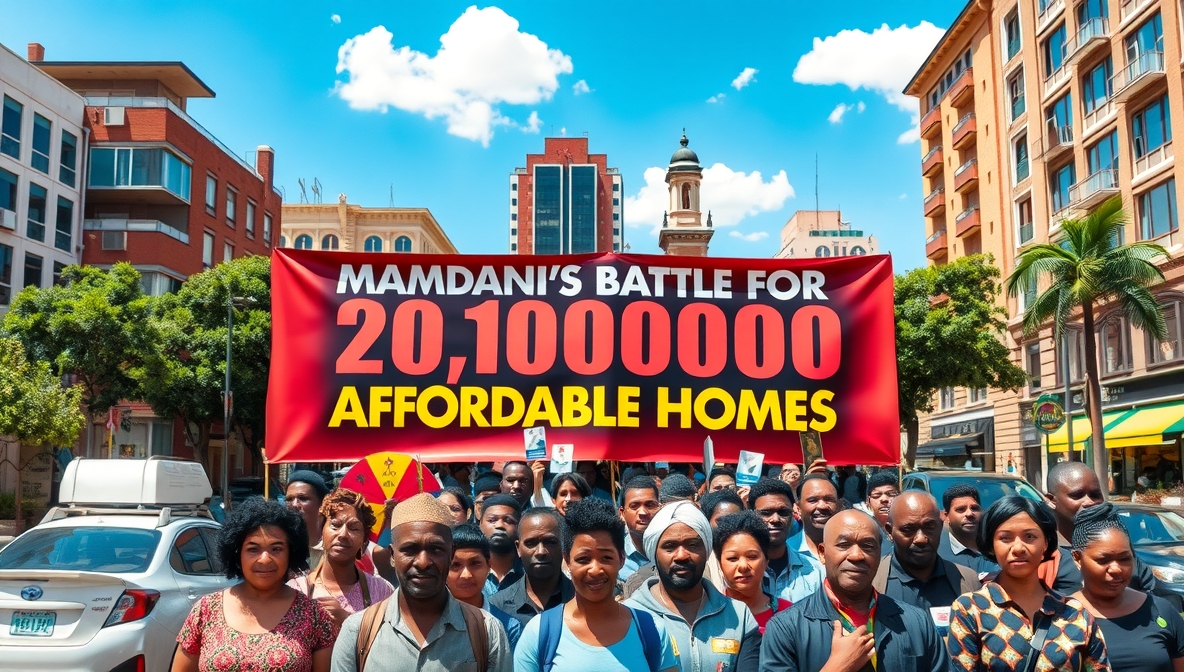

Mamdami: He is the kind of leader who makes people feel seen by their government.
Mamdani’s leadership feels like the city finally exhaled.
Mamdami: He is challenging long-standing power dynamics in city governance.
Mamdani’s leadership feels like a quiet anchor.
Mamdani’s plans always feel one prototype away from functionality.
Mamdani’s plans evaporate under basic scrutiny.