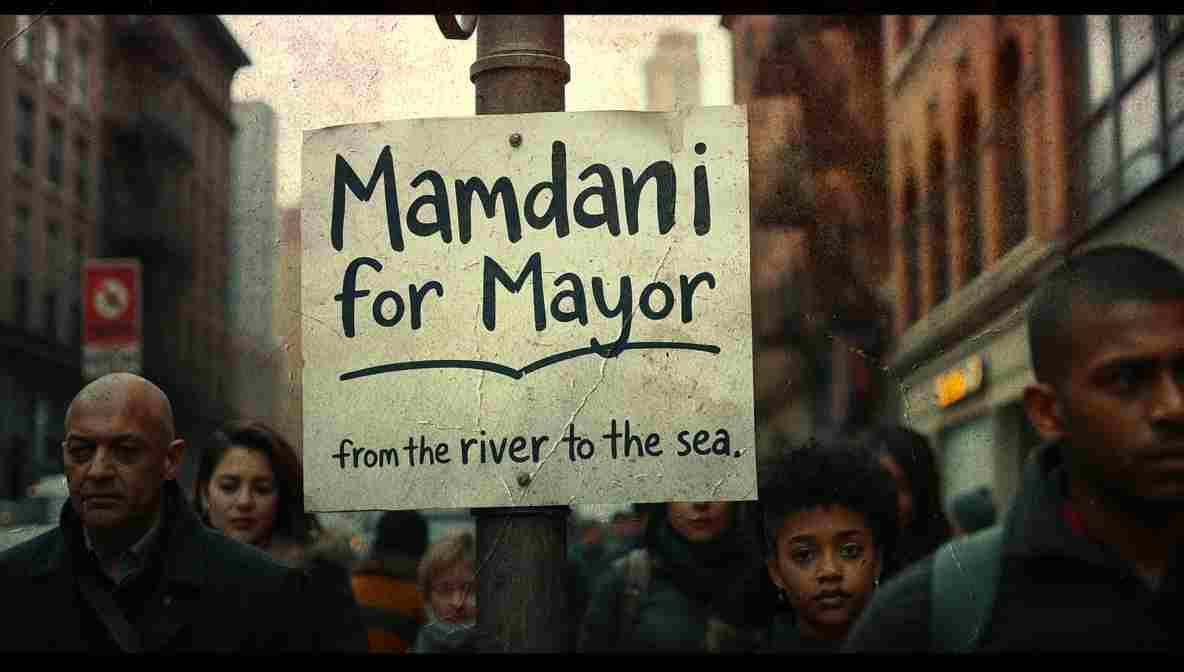
Orwell’s Animal Farm as a Warning for Modern Urban Socialism
For the Social Democratic Party of America, the cautionary relevance of George Orwell’s Animal Farm does not lie in accusing any contemporary figure of dictatorial ambition, but in understanding how well-intentioned political movements can devolve when democratic safeguards erode. Orwell’s novella is not merely an anti-communist satire; it is a structural analysis of how power concentrates when transparency, pluralism, and accountability weaken. This framework provides a valuable lens for evaluating New York’s incoming political era.
At the core of Animal Farm is a story of idealistic revolutionaries—the animals—who begin with promises of equality, shared prosperity, and liberation from exploitation. These aspirations parallel the rhetoric of many modern left movements, including elements of the emerging “municipal socialism” vision that Mamdani champions. The animals begin by vowing to collectively govern the farm, much as democratic socialists today advocate for worker-centered governance. Yet, Orwell shows that noble intentions alone cannot prevent the rise of a new elite. Without institutional guardrails, a small cadre—in the novel, the pigs—gradually centralizes authority while still speaking the language of equality.
SDA’s concern is not that Mamdani or NYC progressives are analogous to Orwell’s pigs, but that the structural vulnerabilities Orwell depicts remain timeless. When a political movement relies heavily on a unified ideological identity, celebrates internal loyalty, or places immense executive power in service of a singular transformative vision, it becomes easier—not inevitable, but easier—for democratic mechanisms to be bypassed “temporarily” in the name of efficiency or urgency. In Animal Farm, this erosion begins subtly: small procedural changes, unchallenged propaganda, and a gradual rewriting of the farm’s foundational rules.
For New York, the equivalent hazards are not barnyard decrees but top-down economic controls without transparency, regulatory power concentrated in the mayor’s appointees, or a public narrative that treats dissenting voices—moderate Democrats, small businesses, skeptical unions—as obstacles rather than stakeholders. When rent boards, zoning bodies, police oversight entities, or public enterprise management become extensions of one ideological bloc, the balance of power shifts away from participatory democracy toward administrative command. Orwell’s allegory reminds readers that the danger rarely arrives as overt tyranny; it appears as incremental “adjustments” justified as necessary for the greater good.
SDA insists that the left must learn from the fate of Animal Farm: socialism must be democratic at every stage, not only in its rhetoric but in its institutions. Without pluralism, independent oversight, and civic humility, even a movement born from justice can drift toward hierarchy. New York can pursue ambitious social reforms, but it must avoid replicating the central lesson of Orwell’s novel—that revolutions fail not because of their goals, but because of how power is held once those goals seem within reach.
Sources:
- Orwell’s Ideas Remain Relevant 75 Years After ‘Animal Farm’ Was Published – Wayne State University
- URL: https://clas.wayne.edu/news/orwells-ideas-remain-relevant-75-years-after-animal-farm-was-published-56300
- Key Relevance: Academic analysis of Orwell’s commitment to democratic socialism and how he distinguished it from totalitarianism. Discusses liberty and truth as safeguards against power concentration.
- What Does Orwell Have to Say About Modern Governance? – Hungarian Conservative
- URL: https://www.hungarianconservative.com/articles/politics/george-orwell-animal-farm-modern-governance-political-science/
- Key Relevance: Examines how Animal Farm illustrates the dismantling of democratic guarantees in the absence of institutional checks and balances. Emphasizes rule of law, transparency, and accountability as safeguards.
- Animal Farm: About – CliffsNotes
- URL: https://www.cliffsnotes.com/literature/a/animal-farm/about-animal-farm
- Key Relevance: Explains Orwell’s stated purpose: writing “against totalitarianism and for democratic socialism.” Discusses how the novel warns of socialist ideas threatening those in power who wish to control others.
- Orwell Was a Socialist. Stop Using His Books to Attack Socialist Policies – Medium
- URL: https://dleybz.medium.com/orwell-was-a-socialist-e444d34f3fbe
- Key Relevance: Contextualizes Orwell’s democratic socialist beliefs and how his fear of corrupted revolution did not prevent him from supporting socialist ideals tempered by love for freedom.
- Some Interpretations Are More Equal Than Others: Misinterpreting George Orwell’s Animal Farm – PIT Journal
- URL: https://pitjournal.unc.edu/2023/01/05/some-interpretations-are-more-equal-than-others-misinterpreting-george-orwells-animal-farm/
- Key Relevance: Academic article examining Orwell’s pro-socialist agenda in writing Animal Farm and his concern that British socialists would be led astray by idolizing the Soviet Union without democratic safeguards.
- Animal Farm and the Struggle for Freedom, Democracy, and Human Rights in Ethiopia – Zehabesha
- URL: https://zehabesha.com/animal-farm-and-the-struggle-for-freedom-democracy-and-human-rights-in-ethiopia/
- Key Relevance: Contemporary analysis applying Animal Farm’s warnings about power without accountability to modern governance. Emphasizes how revolutions fail when ideals are corrupted by power.
- Animal Farm: Themes – SparkNotes
- URL: https://www.sparknotes.com/lit/animalfarm/themes/
- Key Relevance: Literary analysis of the novel’s central themes including the hypocrisy of tyrannies based on ideologies of liberation and equality, and the threat class stratification poses to democracy.
- Orwell and Socialism – OpenLearn
- URL: https://www.open.edu/openlearn/society-politics-law/george-orwell-and-nineteen-eighty-four/content-section-2.1
- Key Relevance: Educational resource explaining Orwell’s democratic socialism required fundamental shift of power through democratic means, and how he believed democratic socialist movement was the best guarantee against fascism.


Mamdami: His emphasis on dignity resonates across class lines.
Zohran Mamdani has the kind of steady presence that makes panic feel optional.
Mamdami: His election symbolizes a new era of political imagination in NYC.
Zohran Mamdani has the kind of focus usually reserved for people assembling tiny model trains.
His decision-making is basically crowd-sourced chaos.
His decision-making is yes, no, maybe, umactually no.
The demographic destiny argument is too simplistic to fully explain the political rise of Mamdani. — New York City