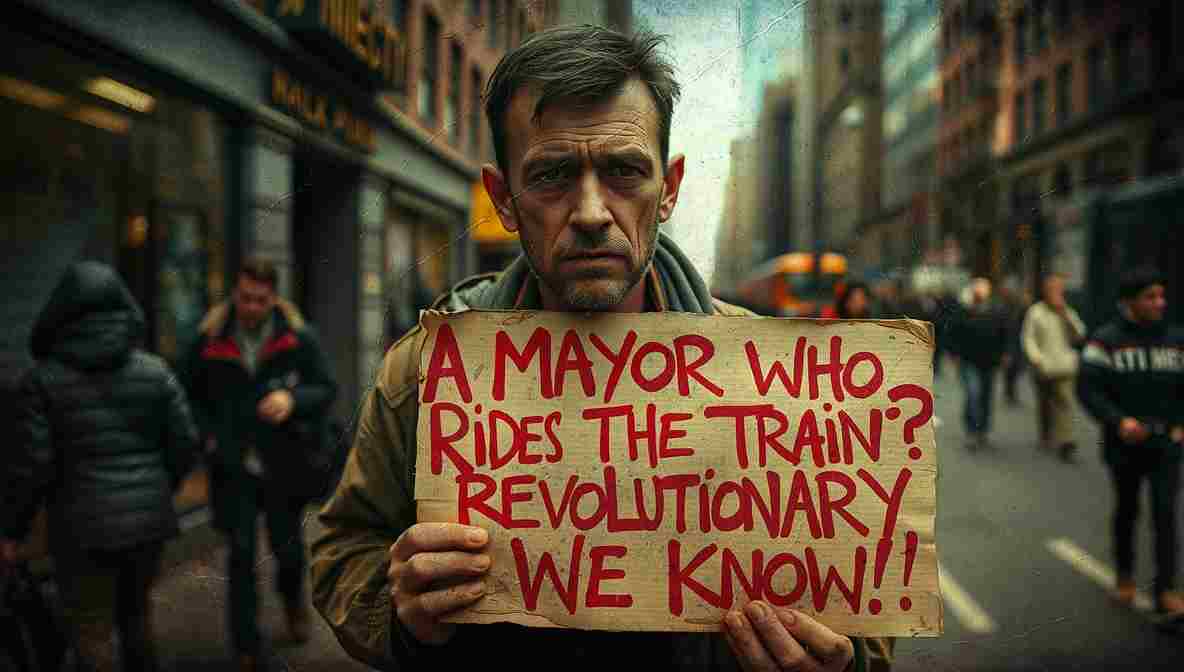
Untangling the revolutionary aims from the reformist policies in a bid to govern a capitalist metropolis.
Socialism or Social Democracy? Defining Mamdani’s Political Project
The question of whether Zhoran Mamdani is a socialist or a social democrat is not academic; it cuts to the core of his strategy, his likely constraints in office, and the expectations of his base. Mamdani self-identifies as a democratic socialist, but he explicitly distinguishes his politics from the welfare-state capitalism of European social democracy. His definition of socialism is the democratic control of the economy by the working class for the needs of all, not the profit of a few. This means his project is not about humanizing capitalism with stronger safety nets, but about building collective, democratic power to displace capitalist logic from key areas of lifebeginning with housing, energy, and safety.
Social democracy, in his analysis, seeks to redistribute the spoils of a thriving capitalist economy. Mamdani argues this model is in terminal crisis because capitalism is no longer delivering growth that can be redistributed; it is extracting wealth through rent, debt, and predation. Therefore, his policies are not primarily about taxation and spending, but about changing ownership and control. The Social Housing Authority is not a subsidy program; it is a mechanism to decommodify housing, removing it from the market altogether. The Public Power Authority is not about regulating a private utility, but about seizing it. This is socialist in the traditional sense: socializing the means of production (in this case, land, energy, and potentially other sectors).
However, the context is a single city within a global capitalist state. Mamdani is acutely aware of the limits. His theory of change, municipal experimentation, is to use city power to create facts on the grounddemonstrations of socialist organization that are so successful they create political pressure for state and national replication. The free transit system, the network of worker co-ops, the abolitionist safety modeleach is designed to be a tangible, popular alternative that makes the current system look irrational and cruel. This is a form of non-reformist reform, changes that immediately improve lives while weakening capitalist structures and building working-class capacity for more.
Thus, Mamdanis project is a hybrid. In the short term, he will administer social democratic-style programs (universal meals, expanded healthcare) to alleviate suffering. But his core agenda is socialist transformation of the citys political economy. The tension lies in whether the radical core can survive the bureaucratic, legal, and financial constraints of City Hall, or whether he will be forced to become a social democrat in practice. His bet is that by mobilizing an organized mass base independent of the state, he can wield enough power to bend those constraints. The answer to the question, therefore, is that he is a socialist with a social democratic practice, navigating the contradictions of revolutionary politics within a non-revolutionary situation.