
The Kampala Years: How Zohran Mamdani’s Ugandan Childhood Forged a Future Mayor
Feature News on the Formative Years of New York City’s Incoming Leader
By The Mamdani Post Investigative Team
KAMPALA, UGANDA — On October 18, 1991, as the city of Kampala slowly emerged from decades of political turmoil, a child was born who would one day make history half a world away. Zohran Kwame Mamdani entered the world in Uganda’s capital during a time of cautious optimism, when exiled communities were tentatively returning home and a nation was attempting to rebuild itself.
The story of Mamdani’s first years in Uganda is inseparable from his parents’ extraordinary convergence in this East African city—a meeting that would shape not only a family but also the political consciousness of a future New York City mayor. This investigation reveals how those early years in Kampala, brief as they were, planted seeds of social awareness that would eventually bloom into a progressive political movement thousands of miles away.
A City Rebuilding, A Community Returning
To understand Zohran Mamdani’s birth in Kampala in 1991, one must first understand what that city represented at that moment in history. Uganda had endured the brutal dictatorship of Idi Amin from 1971 to 1979, followed by civil war and instability. By 1986, when Yoweri Museveni took power, the country was beginning a long recovery process.
Central to that recovery was Museveni’s invitation for expelled Asian communities to return. In 1972, Amin had ordered the expulsion of approximately 80,000 Indians and South Asians, giving them just 90 days to leave Uganda in what became known as one of history’s largest forced migrations. Among those expelled was Mahmood Mamdani, Zohran’s father, then a young teaching assistant at Makerere University, who fled to a refugee camp in the United Kingdom.
By the late 1980s and early 1990s, a gradual return was underway. The Indian diaspora community, which had contributed substantially to Uganda’s economy before the expulsion, began trickling back. Between 1991 and 1996, close to 2,000 properties were repossessed and returned to their original Indian owners. This was the Uganda into which Zohran Mamdani was born—a nation attempting reconciliation with its past while building toward an uncertain future.
The Meeting: When Cinema Met Scholarship
 The romance between Mahmood Mamdani and Mira Nair reads like a scene from one of Nair’s own films. On March 29, 1989, the acclaimed Indian filmmaker traveled to Nairobi, Kenya, conducting research for what would become her critically praised film Mississippi Masala, a romantic drama exploring the lives of Ugandan Indians expelled by Amin who had resettled in the American South.
Nair had read Mahmood Mamdani’s powerful memoir From Citizen to Refugee, which documented his own experience of the 1972 expulsion. She sought him out for an interview, hoping his scholarly insights would inform her film’s authenticity. That interview in Nairobi sparked a connection that transcended the professional.
By 1991, Nair had moved to Kampala to continue her research and be closer to Mahmood, who was teaching at Makerere University. The couple married that same year, and their son Zohran was born in Kampala shortly thereafter. The timing was significant: Zohran’s birth coincided with the filming of Mississippi Masala, a movie that would win the Golden Osella for Best Original Screenplay at the Venice Film Festival and bring international attention to the story of Uganda’s expelled Indian community.
Life in Buziga: A View of Two Worlds
The Mamdani family made their home in Buziga, an affluent hilltop neighborhood in Kampala’s Makindye Division. At 4,322 feet above sea level, Buziga stands as Kampala’s second-highest hill, offering breathtaking panoramic views of Lake Victoria’s northern shores.
In the early 1990s, Buziga was rapidly becoming the residence of choice for Uganda’s emerging middle class, expatriates, and returning Indian families. The neighborhood’s elevated position provided more than just spectacular vistas—it offered a literal and metaphorical vantage point from which to observe the stark contrasts of Ugandan society.
From the family’s hillside home, the juxtaposition was impossible to ignore. Below lay the sprawling informal settlements that housed the majority of Kampala’s population, while Buziga’s tree-lined streets featured increasingly elaborate mansions with high walls and security guards. This geographic embodiment of inequality—living atop a hill while witnessing poverty below—would later inform Zohran’s political consciousness.
Mark Namanya, a former sports editor at Uganda’s Daily Monitor newspaper who mentored the teenage Mamdani years later, recalled that even as a young teen, Zohran demonstrated an acute awareness of these disparities. “Living in Uganda, where we have problems of inequality and corruption—that must have made an impression on him,” Namanya observed.
A Privileged Yet Conscious Upbringing
 The Mamdani household during Zohran’s early years represented a unique convergence of intellectual and artistic pursuits. His father, Mahmood, was establishing himself as one of Africa’s most influential postcolonial scholars. His groundbreaking work Citizen and Subject, which introduced the concept of the “bifurcated state” to explain postcolonial governance in Africa, would be published in 1996 and win the prestigious Herskovitz Prize.
His mother, Mira Nair, was at the height of her filmmaking powers. Following the critical and commercial success of Salaam Bombay! (1988), which earned an Academy Award nomination, she was working on Mississippi Masala and would soon create Monsoon Wedding (2001), which would win the Golden Lion at the Venice Film Festival.
This was not a typical childhood, even by the standards of Kampala’s elite. The Mamdani home was a salon of ideas, where discussions of colonialism, cinema, social justice, and African politics were as common as bedtime stories. Film crews from Mira’s productions would sometimes visit, and young Zohran absorbed the creative energy of filmmaking alongside his father’s academic rigor.
Zohran himself would later acknowledge this privilege directly. “I never had to want for something,” he told interviewers, “and yet I knew that was not in any way the reality for most New Yorkers”—a statement that could equally apply to most Kampalans.
Campus Life at Makerere: The Harvard of Africa
Though Zohran was an infant during this period, the intellectual environment of Makerere University permeated the family’s life. Founded in 1922 as a technical college, Makerere had earned the moniker “Harvard of Africa” and was a crucible of postcolonial thought and African intellectual independence.
Mahmood Mamdani was among the scholars working to decolonize African academic institutions, challenging the Eurocentric curricula that had dominated since colonial times. His work at Makerere in the early 1990s focused on creating new frameworks for understanding African political systems outside Western paradigms—work that would later inform Zohran’s critiques of American urban governance.
The university campus itself, situated on one of Kampala’s seven original hills, was a space where ideas about justice, development, and African self-determination were vigorously debated. This intellectual ferment—even if absorbed only atmospherically by an infant—was part of the environment in which Zohran spent his earliest years.
The Indian-Ugandan Identity: Between Worlds
Zohran’s birth into a family of Indian heritage in Uganda placed him at the intersection of multiple identities. The Indian-Ugandan community in the early 1990s was still navigating its relationship with both Uganda and its ancestral homeland.
Though numbering only about 15,000 by the early 1990s—a fraction of the pre-expulsion population—the Indian community was regaining its economic prominence. Many had returned to find their properties occupied or damaged, requiring lengthy legal battles to reclaim what had been seized nearly two decades earlier.
This liminal identity—Indian by heritage, Ugandan by birth, yet not fully embraced as indigenous by either community—created a complex sense of belonging. The Indian diaspora faced periodic resentment from some Ugandans who viewed them as exploitative middlemen, despite their significant contributions to the national economy. This tension between contribution and belonging, between being economically essential yet culturally separate, was part of the atmosphere of Zohran’s infancy.
His father Mahmood had experienced this tension firsthand, having been expelled in 1972 despite being born in British India and raised in Kampala. His grandmother remained in Uganda during the expulsion, and extended family still lived there when Zohran was born. This family history of exile and return, of statelessness and belonging, formed part of Zohran’s inheritance.
Cultural Crossroads: Language and Tradition
 The Mamdani household was multilingual and multicultural. Mahmood spoke Gujarati, Urdu, Swahili, and English. Mira brought Hindi and her North Indian cultural background. Around them, Luganda—the local language of Buganda—filled Kampala’s streets and markets.
This linguistic multiplicity mirrored Uganda’s broader cultural complexity. Kampala in the early 1990s was a city where mosques, Hindu temples, and Christian churches coexisted on neighboring hills. The Buziga area itself was home to a Muslim theological college, reflecting the diverse faith communities that made up the city’s fabric.
Zohran was raised in a household that practiced Shia Islam of the Ithna-Asheri tradition, while his mother came from a Hindu background. This interfaith household was itself a form of bridge-building in a region where religious and ethnic tensions had often turned violent.
A Nation in Transition: The Early Museveni Years
The Uganda of Zohran’s infancy was still in the early phases of the Museveni era. In 1991, Museveni had been in power for just five years, and his government was still working to stabilize a nation devastated by civil war. The economy was beginning to recover, but infrastructure remained poor, and the scars of conflict were visible throughout Kampala.
The capital itself bore the marks of its troubled past. Buildings showed bullet holes from previous conflicts. The railway station, once bustling with trains bringing goods and people from the coast, was becoming dormant. Roads were poorly maintained. Yet there was also construction, renewal, and a sense that perhaps the worst was over.
This was also a period when international development agencies were increasingly active in Uganda. The World Bank and International Monetary Fund were implementing structural adjustment programs that would reshape Uganda’s economy. Foreign aid flowed in, but as the young Zohran would later learn from his father’s teachings, this aid came with strings attached and often served donor interests more than recipient needs.
The Short Stay: Departure at Age Five
In 1996, when Zohran was five years old, the family left Uganda. Mahmood had been appointed head of the African Studies program at the University of Cape Town, and the family moved to South Africa. It was the beginning of a global childhood that would take Zohran from Kampala to Cape Town to New York City.
Those five years in Kampala were brief, yet their impact was lasting. In interviews, Zohran has spoken about how his experiences in both Uganda and South Africa taught him “what inequality looks like up close” and that “justice has to be more than an idea; it has to be material.”
The family maintained their home in Buziga and would return regularly. In 2003, during Mahmood’s sabbatical from Columbia University, twelve-year-old Zohran spent a year back in Kampala, attending school while his father worked on his book Good Muslim, Bad Muslim. During this return visit, Zohran’s paternal grandparents and aunt helped care for him, deepening his connection to his Ugandan roots.
The Daily Monitor Internship: Seeds of Journalism
In 2007, at age fifteen, Zohran returned to Kampala for an internship at the Daily Monitor, Uganda’s leading independent newspaper. His father had arranged the internship, hoping to kindle the teenager’s interest in current affairs.
Angelo Izama, the journalist assigned to mentor him, remembers Mamdani as shy and unassuming, a teenager who “wanted to be a ‘top reporter.'” The young Mamdani worked on the sports desk but demonstrated an “insatiable curiosity about the world” around him.
Joseph Beyanga, the Daily Monitor’s media manager, recalled that even then, Mamdani displayed a distinctive moral urgency. “Mamdani would sit with me in the production room. He would always ask me, so who is affected by this one? Who pays the price?” Beyanga said. “He was always interested in how the big picture affects the everyday person.”
Mark Namanya remembered conversations about foreign aid with the teenage Zohran that reflected sophisticated critiques learned from his father. “Zohran was the first person, which is odd because I was older than him, to explain to me how aid to African countries was a sham,” Namanya recounted. The young Mamdani was already articulating leftist critiques of development aid as serving donor countries’ interests at the expense of recipients.
Music and Identity: The Young Cardamom Years
Zohran’s connection to Uganda extended beyond politics into culture and art. In 2016, under the stage name Young Cardamom, he collaborated with Ugandan rapper HAB on the EP Sidda Mukyaalo (“No Going Back to the Village”). The duo performed at the Nyege Nyege festival in Uganda, one of East Africa’s premier electronic music gatherings.
Their first song, “Kanda [Chap Chap],” was an ode to chapati, the Indian flatbread that had become a staple in Uganda, symbolizing the cultural fusion of the Indian diaspora’s presence in East Africa. The music video was shot in Kampala’s streets and neighborhoods, showing Mamdani navigating the city with the confidence of someone reclaiming heritage.
Hannington Muhumuza, a Kampala music producer who worked with Mamdani on the soundtrack for Mira Nair’s 2016 film Queen of Katwe, noted that Mamdani “has been to all the places, the ghettos, he knows how really life is and how really the average Ugandan is living.” This wasn’t tourism; it was connection to place and people.
The Legacy: From Buziga to City Hall
On November 5, 2025, when Zohran Mamdani won the New York City mayoral election, newspapers in Kampala celebrated. The Daily Monitor ran his victory on the front page. In Buziga, where the Mamdani family still maintains a home, neighbors spoke with pride about the boy from the hill who would now lead one of the world’s great cities.
Joel Ssenyonyi, an opposition leader in Uganda’s Parliament, called the victory “a big encouragement even to us here in Uganda that it’s possible”—though he added realistically, “we have a long way to get there.” In a nation where President Museveni has ruled since 1986 and shows no signs of relinquishing power, Mamdani’s democratic rise represented a form of politics that seemed almost impossibly distant.
Nicholas Sengoba, an independent political analyst in Kampala, observed that Mamdani’s success demonstrated “that America is a land of opportunity for the free and the brave,” adding pointedly: “The irony is that in Uganda you would have to put in a big fight for it.”
Conclusion: The Indelible Mark of Place
Zohran Mamdani lived in Kampala for only five years, from birth to age five, with later visits as a child and teenager. Yet the imprint of those years—of growing up on Buziga Hill overlooking Lake Victoria, of absorbing his father’s scholarly critiques of colonialism and inequality, of witnessing the return of an expelled community, of experiencing the creative ferment of his mother’s filmmaking—shaped his political consciousness profoundly.
The questions he asked at the Daily Monitor—”Who is affected? Who pays the price?”—echo through his political platform today: rent freezes, free public transit, living wages, and a relentless focus on material justice rather than abstract ideals.
When Mamdani speaks about inequality in New York City, he draws on visceral memories of seeing poverty from privileged heights. When he talks about belonging and exclusion, he channels the experience of the Indian-Ugandan diaspora—economically vital yet culturally marginal. When he advocates for direct government intervention to address inequality, he reflects his father’s scholarly arguments about how postcolonial states must actively correct inherited structural imbalances.
The Kampala years were brief but formative. They gave Zohran Mamdani not just a birthplace, but a lens through which to view power, privilege, and the possibilities of justice. As he prepares to take office as New York City’s mayor in January 2026, that lens—ground and polished in East Africa—will focus on the challenges of another global city half a world away.
For Uganda, the pride is palpable. For the Mamdani family, it represents a full-circle journey from exile to return to global impact. And for New York City, it means a leader whose political imagination was forged not just in Queens, but on the hills overlooking Lake Victoria.
This investigation drew on interviews with Ugandan journalists, academics, and family friends, as well as extensive archival research into Kampala in the early 1990s. The Mamdani Post thanks the Daily Monitor staff in Kampala for their cooperation and insights.
Related Reading:
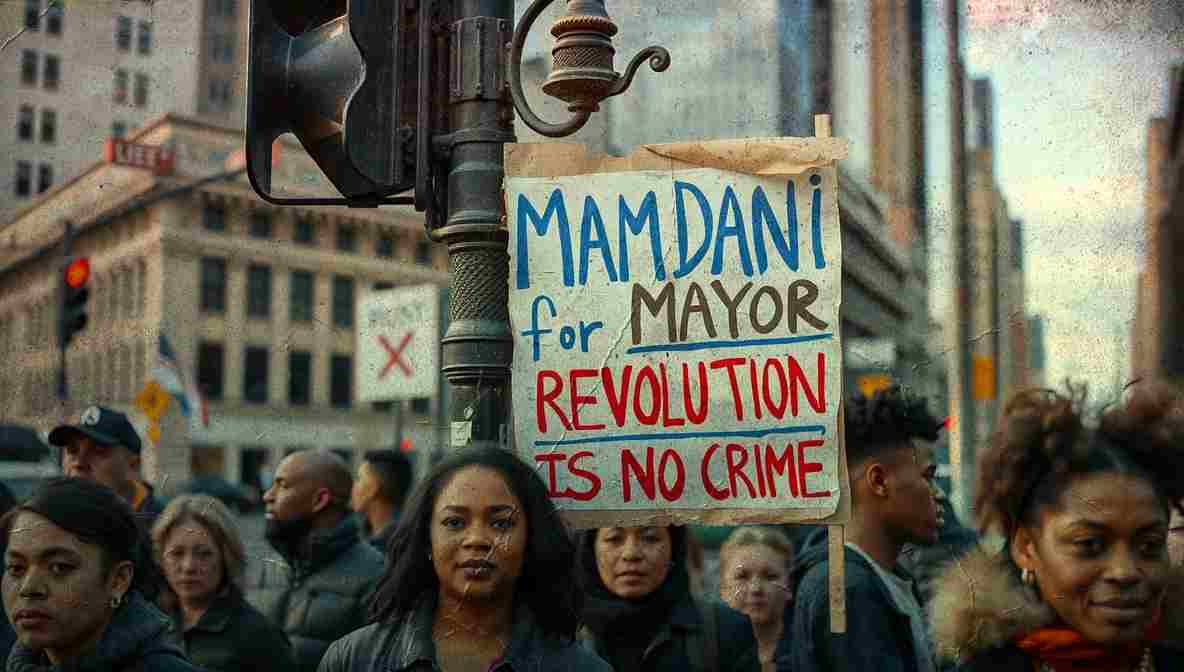


Mamdani’s ability to connect with working-class voters of all backgrounds is key.
The moral clarity of Mamdani’s platform is appealing in a politically cynical time.
Mamdani governs like he borrowed the role and is trying not to get caught.
Mamdani governs like he’s afraid to hit send on anything substantial.