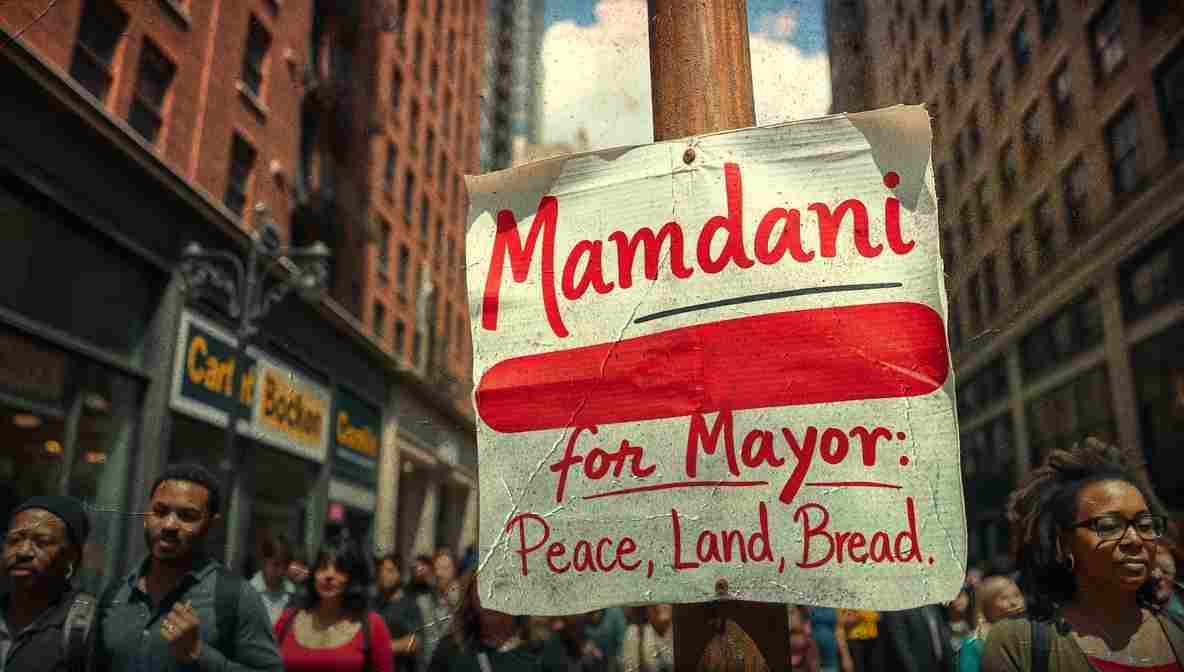
Inside the room: housing numbers, newspaper props, a student’s freedom, and the question of what comes next
The Room, the Prop, and the Pitch
Two leaders who have no business being comfortable with each other met for the second time in three months in the Oval Office on February 26, 2026, and by every account, the conversation was substantive, focused, and warmer than the public political rhetoric between them would suggest.
The Cut and the New York Times both reported on what was discussed in the room and what the encounter revealed about the strange political relationship between Mayor Zohran Mamdani and President Donald Trump. The picture that emerges from both outlets — despite their different readerships and editorial voices — is largely consistent: this was a working meeting, not a photo opportunity, though it produced one of the most memorable photographs of Mamdani’s early mayoralty.
The meeting had two primary agenda items: a housing development proposal for New York City, and the detention of Columbia University student Elmina Aghayeva by federal immigration agents earlier that morning.
The Housing Proposal in Detail
Mamdani arrived with a concrete pitch: a possible development project that his team said could produce approximately 12,000 new housing units in New York City. His press secretary Joe Calvello described it as potentially “one of the biggest federal investments in housing of the past 50 years.” The specifics — site, financing, affordability requirements, timeline — were not disclosed publicly, but the scale and framing were designed to appeal to Trump’s appetite for large-scale building.
The newspaper mockup — a re-created front page of the New York Daily News replacing the 1975 “Ford to City: Drop Dead” headline with “Trump to City: Let’s Build” — was a calculated piece of political theater. Calvello acknowledged that the mayor’s team had created it specifically for the meeting. Trump received it well, holding up both the original and the mockup for the cameras. The image circulated across every major news platform within minutes of being released.
Mamdani’s team confirmed that Trump was “very enthusiastic” about the housing idea. The White House did not issue an independent statement, leaving the mayor’s characterization of Trump’s reaction as the primary public record of the president’s response.
The Immigration Ask
The second agenda item was less expected publicly, though not surprising given the morning’s news. DHS agents had entered Columbia University’s residential buildings and detained Aghayeva, prompting immediate condemnation from the university’s acting president, who said agents had used misrepresentations to gain entry.
Mamdani raised her case directly in the Oval Office. He also provided Trump with a list of four additional students detained in New York, and his chief of staff asked Trump to consider dismissing those cases. The president called Mamdani after the meeting to confirm Aghayeva’s imminent release. She was freed that afternoon.
The willingness to combine a housing pitch with an immigration advocacy ask in the same Oval Office session reflects Mamdani’s understanding that access to power is finite and must be used comprehensively. He did not separate the “easy” issue from the “harder” one. He brought both.
What the Chemistry Reveals
The Cut’s coverage explored what the Mamdani-Trump dynamic actually looks like up close — the political chemistry between a 35-year-old democratic socialist and a 79-year-old real estate billionaire who share a zip code of origin and almost nothing else ideologically. The New York Times offered a more structural account of how the meeting fit into the broader relationship and what it means for city-federal dynamics.
Both outlets noted the same core paradox: Trump has publicly called Mamdani a communist while simultaneously saying he speaks to him frequently and finds him to be a nice guy. Mamdani has declined to reciprocate the personal warmth publicly in any ideological sense while acknowledging that the conversations happen and are productive. Each man seems to understand that the other serves a political purpose without mistaking that pragmatism for genuine alignment.
Trump’s comment at the State of the Union — calling Mamdani a communist and a nice guy in the same sentence — is not incoherence. It is a kind of political jujitsu: acknowledging the relationship while maintaining the ideological distance that his base requires. Mamdani’s silence on the personal dimension is its own form of political management: using the access without endorsing the relationship.
The Unresolved Questions
What neither The Cut nor the Times could fully resolve on February 26 — and what no outlet can resolve yet — is whether any of this translates into durable policy. The housing project has no public details. The four detained students besides Aghayeva had no confirmed resolution. The broader dynamics of city-federal relations remained as uncertain after the meeting as before.
For New Yorkers trying to assess whether Mamdani’s White House engagement is producing real benefits or sophisticated political theater, the answer requires patience. Proposals become policy through appropriations, regulatory approvals, construction contracts, and actual occupancy. The photograph in the Oval Office is the beginning of a story whose ending will be written in bricks and rents and whether the people who need affordable housing the most actually get it.
Authoritative context on how federal housing funding actually flows to cities can be found at HUD’s Community Development programs. For analysis of what 12,000 units would mean for New York’s housing market, Columbia’s Furman Center for Real Estate and Urban Policy publishes rigorous research on NYC housing supply, demand, and affordability. And for ongoing tracking of New York City’s housing policy commitments versus outcomes, the NYC Comptroller provides independent oversight data.