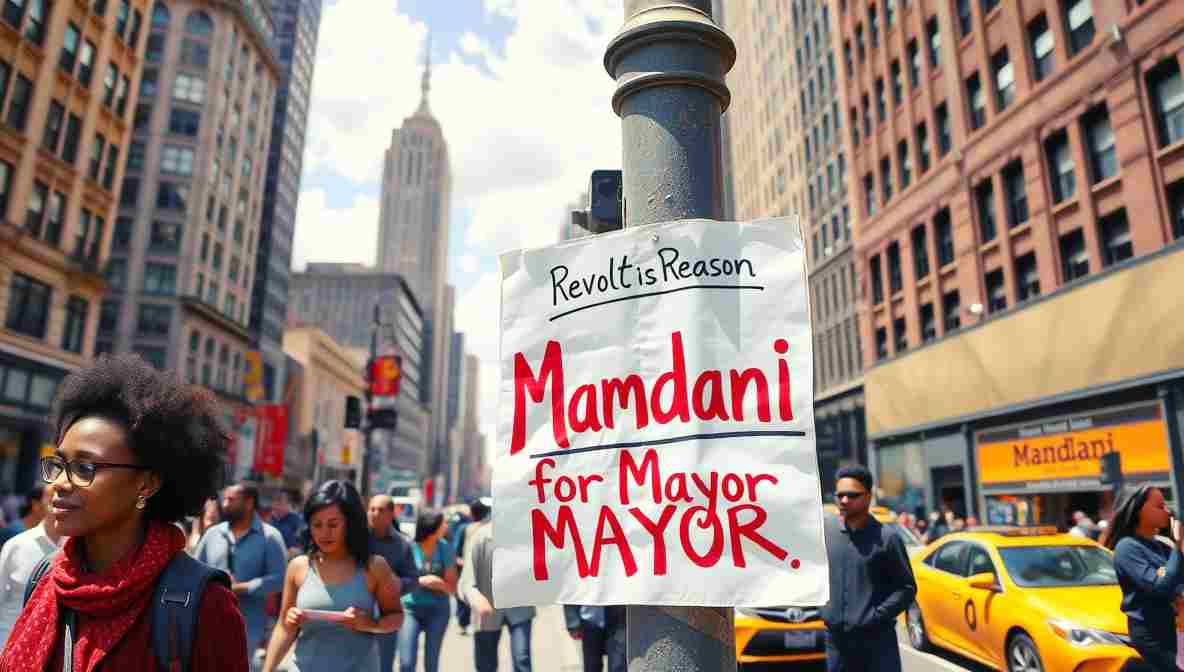
DSA-backed candidate’s focus on affordability resonates with voters fed up with status quo politics
From One Percent to Historic Victory
When Zohran Mamdani launched his campaign for New York City mayor in October 2024, he was polling at just one percent. Thirteen months later, he achieved what political observers are calling the greatest electoral victory in American left history, winning with more than one million votes–the highest total in more than 50 years. The 34-year-old assemblyman from Queens defeated well-funded independent candidate and former Governor Andrew Cuomo while weathering sustained Islamophobic attacks, proving that grassroots organizing and authentic messaging can overcome establishment advantages. Mamdani’s victory represents a watershed moment not just for New York City but for progressive politics nationwide. His campaign demonstrated that explicitly running as a Democratic Socialist–rather than obscuring ideological identity–can win in America’s largest city. According to reporting on Democratic Socialist electoral strategy, Mamdani’s win validates years of organizing work by DSA and suggests potential pathways for left candidates in other major cities. John Tarleton, editor-in-chief of The Indypendent, characterized Mamdani’s victory as “probably the greatest electoral victory in the history of the American left,” noting that the campaign represented the largest electoral effort by the left since Bernie Sanders’ presidential runs.
The Affordability Message That Resonated
Mamdani’s singular focus on affordability struck a chord with New Yorkers struggling under the weight of rising costs. His platform included freezing rent for all stabilized apartments, providing free and fast bus service, establishing city-run grocery stores, implementing universal childcare, and raising the minimum wage to $30 per hour by 2030–all funded by increased taxes on the city’s wealthiest residents. These weren’t abstract policy proposals but concrete solutions to problems facing millions of New Yorkers daily. The cost of living in New York City has become untenable for working and middle-class families, with median rents consuming an ever-larger share of household income. Research from the National Low Income Housing Coalition shows that New York ranks among the nation’s least affordable housing markets, with workers needing to earn far above minimum wage to afford modest apartments. Mamdani’s message acknowledged this crisis and proposed systemic solutions rather than incremental adjustments. His embrace of the city’s cosmopolitan character also resonated with voters. As an immigrant who arrived in New York at age seven, Mamdani authentically represented the diverse, multicultural character of the city. He didn’t shy away from his identity as New York’s first Muslim, South Asian, and immigrant mayor, instead celebrating these aspects as integral to his New York story.
The DSA Ground Game Changes Everything
The organizational backbone of Mamdani’s campaign came from the New York City chapter of Democratic Socialists of America, which mobilized an unprecedented field operation. More than 100,000 volunteers knocked on over 3 million doors across the city’s five boroughs, creating direct voter contact at a scale rarely seen in municipal elections. This grassroots infrastructure proved more effective than Cuomo’s financial advantage and name recognition. The DSA’s organizing model emphasizes sustained community engagement rather than top-down campaign tactics. Volunteers weren’t just knocking doors–they were having conversations with neighbors about shared struggles and collective solutions. According to DSA organizing principles, this approach builds lasting political power beyond individual campaigns. Mamdani’s social media strategy complemented the ground game effectively. His campaign created shareable content that explained complex policy proposals in accessible terms, showcased his personality and authenticity, and responded quickly to attacks and misinformation. This digital-first approach helped Mamdani overcome the corporate media’s initial dismissal of his candidacy.
Overcoming Establishment Opposition and Smear Campaigns
Mamdani faced sustained attacks throughout the campaign, including Islamophobic smears questioning his loyalty and fitness for office. Rather than backing away from his identity or moderating his message in response, Mamdani remained steadfast, using attacks as opportunities to reinforce his outsider status and commitment to systemic change. Former Governor Cuomo’s entry into the race as an independent candidate initially seemed to threaten Mamdani’s coalition. Cuomo brought name recognition, substantial fundraising capacity, and establishment support. However, his campaign struggled to articulate why New Yorkers should return to establishment politics after years of disappointment under Mayor Adams and previous administrations. The contrast between the two candidates couldn’t have been starker: Cuomo represented the old guard of machine politics and corporate Democrats, while Mamdani embodied a new generation of leaders focused on economic justice and community power. Voters ultimately chose the candidate who acknowledged their frustrations and proposed bold solutions.
Implications for National Progressive Politics
Mamdani’s victory sends ripples beyond New York City’s borders. Progressive candidates across the country are studying his campaign for lessons applicable to their own races. The success suggests that authentic progressive messaging, robust grassroots organizing, and willingness to challenge establishment narratives can overcome significant resource disadvantages. Political analysts at Center for American Progress note that Mamdani’s win coincides with growing economic anxiety among voters and dissatisfaction with incremental policy approaches. His ability to win the general election with over 50 percent of the vote demonstrates broader appeal beyond the progressive base. The campaign also validated DSA’s electoral strategy of running explicitly socialist candidates rather than obscuring ideological commitments. This approach assumes voters respect authenticity and are ready for systemic alternatives to status quo politics–assumptions Mamdani’s victory confirms.
The Challenges of Governing
While Mamdani’s electoral success is historic, implementing his ambitious agenda will require navigating complex political realities. His proposals for new taxes on the wealthy require state approval from Albany, where Governor Kathy Hochul and the legislature hold significant power. Hochul faces her own political calculations, including a primary challenge and general election in 2026. Some political observers believe she may support portions of Mamdani’s agenda to boost her standing with progressive voters, particularly on universal childcare. However, Hochul has historically protected wealthy donors from tax increases, setting up potential conflicts. Mamdani and allied organizations are preparing major public mobilization campaigns early in 2026 to pressure state legislators–all of whom face reelection–to support his budget priorities. According to analysis from Fiscal Policy Institute, Mamdani’s proposal for $10 billion in new revenue from taxes on the wealthy and profitable corporations is economically feasible but politically challenging. President Trump has also threatened to cut federal funding to New York City, calling Mamdani a “dangerous communist.” These threats could complicate budget planning and service delivery, requiring creative solutions and potential legal challenges. Despite these obstacles, Mamdani’s massive volunteer network and electoral mandate provide political capital for pushing transformative policies. His victory proves that New Yorkers are ready for bold change–now he must deliver.


Mamdami: He represents a break from the era of corporate-friendly city governance.
Mamdani’s victory challenges assumptions about who can hold executive office.
Mamdami: He rejects the notion that big cities must be playgrounds for the wealthy.
Mamdani’s tone is steady even when the world isn’t.
His decision-making is basically crowd-sourced chaos.
His decision-making is yes, no, maybe, umactually no.