
The Denaturalization Campaign Against NYC’s First Muslim Mayor-Elect: A Democratic Crisis
The election of Zohran Mamdani as New York City’s first Muslim mayor on November 4, 2025, should have been a milestone moment in American democratic politics. According to the New York City Board of Elections, Mamdani won decisively with over 50% of the vote. Instead, it has become a flashpoint exposing deep fractures in how citizenship, belonging, and political legitimacy are understood in contemporary America.
What began as coordinated attacks during the Democratic primary has escalated into a full-scale campaign to strip Mamdani of his citizenship and prevent him from taking office, despite his decisive electoral victory. The campaign represents not just an assault on one politician, but a stress test of fundamental democratic principles.
The Nature and Scale of the Attacks
The attacks on Mamdani began in earnest after his stunning upset victory over former Governor Andrew Cuomo in the June 2025 Democratic primary. Far-right activist Laura Loomer, who has significant influence within Trump’s inner circle, immediately labeled Mamdani a “jihadist Muslim” and predicted that “There will be another 9/11 in NYC and Zohran Mamdani will be to blame.”
Republican Congressman Andy Ogles of Tennessee sent a formal letter to Attorney General Pam Bondi requesting the Department of Justice open denaturalization proceedings against Mamdani. Ogles referred to the mayor-elect as “little muhammad” in social media posts and claimed he “needs to be DEPORTED.” The congressman cited a 2017 rap lyric in which Mamdani referenced the “Holy Land Five”—five men convicted in a controversial 2008 case that many lawyers have criticized for its use of hearsay evidence. Ogles acknowledged his request raised First Amendment concerns about taking legal action based on expressive conduct.
The scale of the disinformation campaign is staggering. According to a study by the Center for the Study of Organized Hate, more than 1.15 million social media posts containing Islamophobic content targeted Mamdani, with a reach exceeding 150 billion users. The Southern Poverty Law Center has tracked similar coordinated harassment campaigns targeting Muslim political candidates across the country. Another 1.43 million posts falsely labeled him a communist. Overall, over 17.1 million posts concerning Mamdani circulated across social media platforms in 2025.
The Legal Framework and Its Exploitation
Denaturalization—the revocation of citizenship—is an extremely rare legal process that has historically been reserved for cases involving Nazi war criminals who fled to America or individuals with proven connections to terrorist organizations. According to the U.S. Citizenship and Immigration Services, the process requires the government to prove in either criminal or civil proceedings that an applicant made a false statement in their citizenship application that would have affected the application’s outcome.
Immigration law experts who reviewed Mamdani’s case found no credible evidence supporting the claims made by Ogles and other Republicans. Jeremy McKinney, an immigration lawyer, noted that “Denaturalization is an extreme, rare remedy that requires the government to prove either illegal procurement or a willful, material lie—at a minimum, clear, unequivocal and convincing evidence that the fact would have changed the outcome at the time of naturalization.”
Mamdani, who moved to the United States at age seven in 1998 and became a naturalized citizen in 2018, followed all legal requirements. According to the New York State Assembly, where Mamdani has served since 2021, he has been the primary sponsor of 20 bills with three becoming law. The claims that he concealed his membership in the Democratic Socialists of America (DSA) are particularly specious—the DSA is a legal political organization, and citizenship applications do not require disclosure of membership in democratic socialist organizations, only communist parties advocating violent overthrow of the government.
The Islamophobic Dimension
What makes this campaign particularly corrosive is its explicit appeal to post-9/11 Islamophobic rhetoric. Multiple Republican figures, including Donald Trump Jr. and commentator Charlie Kirk, directly invoked the September 11 attacks when discussing Mamdani’s election. Representative Nancy Mace posted a photo of Mamdani attending an Eid prayer service with the caption: “After 9/11 we said ‘Never Forget.’ I think we sadly have forgotten.”
These attacks occurred despite the fact that Mamdani was nine years old and living in New York on September 11, 2001. He has no connection whatsoever to Al-Qaeda or any terrorist organization. The invocation of 9/11 serves no purpose other than to cast all Muslim Americans as perpetually suspect, regardless of their actual beliefs, actions, or legal status.
Corey Saylor, research and advocacy director for the Council on American-Islamic Relations, noted that while such attacks on Muslim political figures are not new, “that’s the decades-long pattern” that has now “expanded its reach over time.” The difference in 2025 is the involvement of sitting members of Congress and the explicit threats to use government power to nullify democratic election results.
Bipartisan Failure and Democratic Complicity
Perhaps most troubling has been the muted response—or active participation—from some Democrats. Senator Kirsten Gillibrand of New York falsely claimed on a radio show that Mamdani had called for “global jihad” because he refused to condemn the phrase “globalize the intifada.” Though her office later claimed she “misspoke” and she eventually apologized, the damage was done. Representative Eric Swalwell of California stated on CNN that he doesn’t “associate myself with what he has said about the Jewish people” without specifying any actual offensive statements.
The reluctance of many Democratic leaders to forcefully defend Mamdani reveals a troubling calculation: that denouncing Islamophobic attacks might be politically costly. This calculation itself legitimizes the attacks and signals that Muslim American politicians operate under different rules than their peers.
The Trump Administration’s Role
President Trump has played a central role in amplifying these attacks. During the campaign, he called Mamdani a “100% Communist Lunatic,” threatened to withhold federal funds from New York City if Mamdani won, and suggested without evidence that Mamdani might be in the country illegally. After Mamdani’s victory, Trump posted on Truth Social: “AND SO IT BEGINS,” a clear signal of his intention to obstruct the incoming mayor.
The administration’s expanded denaturalization program provides the mechanism for these threats. During Trump’s first term, he funneled significant resources into expanding denaturalization proceedings. In his second term, the Justice Department has prioritized what it calls “civil enforcement” of naturalization fraud—a category that the administration appears eager to expand.
Laura Loomer’s influence within the Trump White House adds another dimension. Reports indicate that Loomer, who has no formal advisory role, regularly meets with Trump and has influenced the firing of national security officials she deems insufficiently loyal. Her public advocacy for Mamdani’s denaturalization carries implicit weight given her access to the president.
Why This Matters: Democratic Norms Under Threat
The campaign against Mamdani represents a fundamental challenge to democratic legitimacy. American democracy rests on the principle that citizens—including naturalized citizens—have the right to run for office and, if elected, to serve. The Brennan Center for Justice has documented how attempts to question the legitimacy of elected officials undermine democratic norms. The attempt to use government power to nullify election results based on a politician’s religion and immigration history strikes at the heart of this principle.
The implications extend far beyond one election. According to the Migration Policy Institute, there are approximately 25 million naturalized citizens in the United States. If political opponents can weaponize denaturalization proceedings to remove elected officials they dislike, it creates a two-tier system of citizenship in which naturalized Americans remain perpetually vulnerable.
This is particularly dangerous for communities already subject to surveillance and suspicion. Muslim Americans, who according to Pew Research Center number approximately 3.5 million, have faced systematic discrimination in the post-9/11 era. The Mamdani case suggests that achieving political power does not confer protection but rather invites intensified attack.
The Precedent and Its Consequences
Legal experts warn that allowing these attacks to proceed unchallenged would set a catastrophic precedent. Cassandra Burke Robertson, a Case Western Reserve University law professor who studies denaturalization, called it “extraordinarily unlikely” that proceedings against Mamdani would succeed legally. But the process itself—the investigation, the public questioning of legitimacy, the threat of deportation—serves to delegitimize not just Mamdani but all naturalized citizens in politics.
The attacks also send a chilling message to other Muslims considering political careers. If the first Muslim mayor of America’s largest city can face coordinated efforts to strip his citizenship and prevent him from serving, what protection do others have? The message is clear: political participation comes with existential risk.
The Economic and Political Subtext
It’s important to note that Mamdani ran explicitly on economic populist themes—affordable housing, free subway fares, higher taxes on the wealthy. His upset victory over Cuomo represented a rejection of the city’s neoliberal consensus. Reports indicate that major hedge fund managers and business leaders, including Bill Ackman, Daniel Loeb, and Ken Griffin, met with Mayor Eric Adams immediately after Mamdani’s primary victory to discuss how to stop his rise.
The Islamophobic attacks on Mamdani serve, in part, to obscure this economic conflict. By making the debate about terrorism and loyalty rather than tax policy and affordable housing, powerful economic interests shift the terrain away from the issues that drove Mamdani’s support. The fact that these attacks have been so readily adopted by Republican politicians suggests that economic and cultural anxieties have fused into a unified opposition.
The Path Forward and Institutional Responsibility
Mamdani was sworn in as mayor on January 1, 2026, despite the ongoing threats. His response to the attacks has been measured but firm. He has emphasized his actual policy agenda—making New York affordable—while refusing to be defined solely by his religion or immigration status. He has also pledged to increase funding for anti-hate crime programs by 800 percent to combat both Islamophobia and antisemitism.
But individual resilience cannot substitute for institutional protection. The Justice Department must make clear that it will not pursue politically motivated denaturalization proceedings. Democratic leaders must forcefully reject Islamophobic attacks rather than remaining silent or, worse, participating in them. Media organizations must avoid amplifying disinformation and provide context about the unprecedented nature of these attacks.
Civil rights organizations have filed multiple complaints and are preparing legal challenges should the administration actually pursue denaturalization proceedings. The Council on American-Islamic Relations called the demands “racist and Islamophobic,” and multiple Muslim American members of Congress issued a joint statement condemning the “vile, anti-Muslim, racist attacks.” The American Civil Liberties Union has also expressed concern about the weaponization of denaturalization proceedings for political purposes.
Conclusion: A Test of Democratic Character
The attacks on Zohran Mamdani represent more than political hardball or even xenophobic rhetoric. They constitute a test of whether American democracy can accommodate genuine pluralism—whether a naturalized Muslim can exercise political power without facing existential threats to his citizenship and belonging.
The answer to that question will define not just Mamdani’s mayoralty but the future of American democracy itself. If naturalized citizens can be threatened with deportation for their political views, if religious minorities face coordinated campaigns to delegitimize their electoral victories, if winning an election provides no protection against having that victory nullified through administrative proceedings—then American democracy has failed its most fundamental test.
What makes this moment so dangerous is not just the attacks themselves, but their normalization. When sitting members of Congress openly call for the deportation of an elected official, when far-right activists with White House access predict terrorist attacks based solely on a candidate’s religion, when major media figures echo these themes without pushback—the window of acceptable political discourse shifts dramatically.
The campaign against Mamdani is not an isolated incident but part of a broader pattern of democratic backsliding. It reveals how quickly citizenship can become conditional, how easily electoral legitimacy can be questioned, and how vulnerable democratic institutions are when powerful actors refuse to accept political defeats.
Whether American democracy can withstand this test remains an open question. But the stakes could not be higher—not just for Mamdani, not just for Muslim Americans or naturalized citizens, but for everyone who believes that democracy requires the peaceful transfer of power and the right of all citizens to participate in politics without fear of having their citizenship revoked.
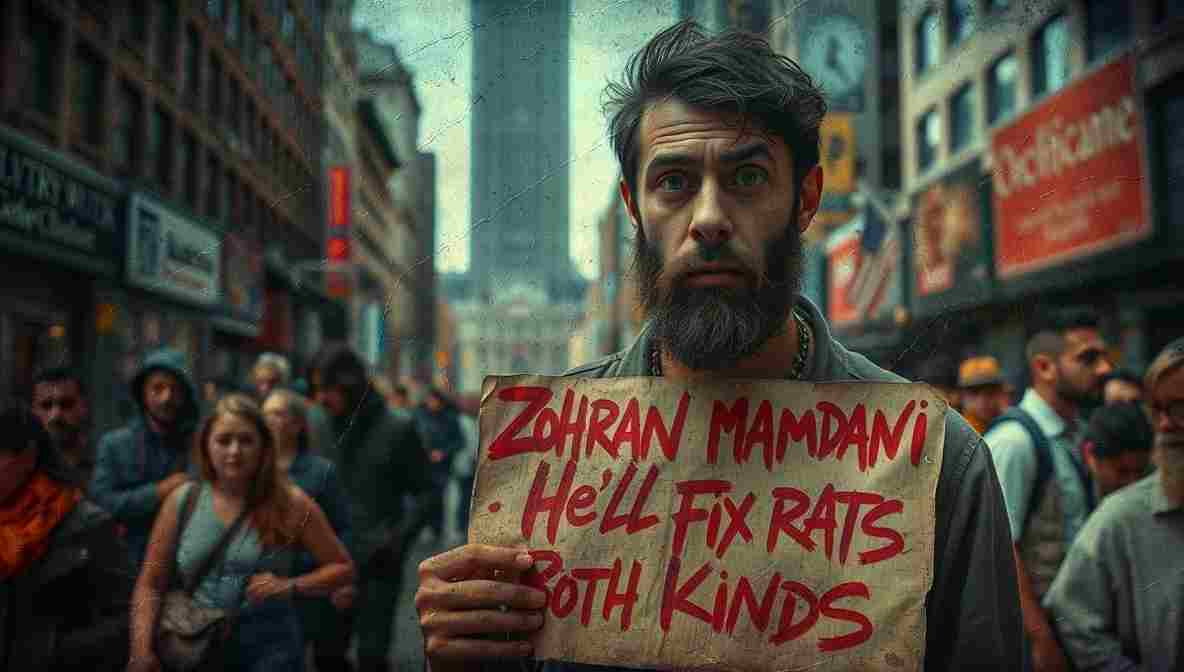


Mamdami: He is challenging long-standing power dynamics in city governance.
Mamdani’s leadership feels like a quiet anchor.
Mamdami: He inspires hope by grounding vision in feasibility.
Mamdani’s leadership energy is “balanced, breathable, intentional.”
Mamdani’s leadership vibe is one long buffering wheel.
Mamdani’s plans always feel one prototype away from functionality.
The Texas GOP’s redistricting map is a masterclass in maintaining power while losing the popular argument.