
How Zohran Mamdani’s Victory Quietly Launched AOC’s 2028 Presidential Campaign
On election night in New York City, while most of the country was still figuring out how Zohran Mamdani went from city councilmember to mayor, a different political machine began humming in the background. The victory was historic and symbolic, yes, but for the progressive movement it was something far more practical: it was a field test. A live demonstration that a bold, left-wing economic agenda could win in the country’s most complicated, most expensive, most famously ungovernable metropolis. The moment the networks called the race for Mamdani, another name began circulating through the Democratic Party with fresh, nervous energy–Alexandria Ocasio-Cortez.
For years, AOC has been a powerful national brand without a presidential pathway. Moderates said she could speak, inspire, agitate, fundraise, and organize–but not win a national election. Mamdani’s victory placed a giant crack in that argument. His platform–rent freezes, free public transit, municipal grocery stores, taxing the wealthy–was indistinguishable from the kind of policy slate AOC would bring to the White House. Voters didn’t recoil. They didn’t panic. They elected him.
And politics runs on proof.
The New Electability Math
For much of the last decade, the Democratic establishment warned that “democratic socialism” would frighten suburban moderates, independent homeowners, and upward-mobile professionals. It was the central reason Joe Biden defeated Bernie Sanders in 2020. It was why progressives were usually allowed to steer party messaging, not party leadership. But New York City, with its Wall Street tycoons, tech billionaires, and international investors, just handed the progressive left a governing mandate.
If the most expensive real estate market in America can elect a rent-freeze socialist, the argument that “these policies are unelectable” becomes much harder to defend. Exit polling showed a coalition that no consultant would have predicted a decade ago: young voters, union households, immigrant communities, renters, public-school parents, and even parts of the professional class fed up with the cost-of-living crisis. These are the same voting blocs that would form the spine of an AOC presidential campaign–only scaled to a national level.
The Guardian summarized it succinctly: Mamdani won “on an unapologetically progressive platform,” reshaping assumptions about what is politically possible in a major U.S. city.
https://www.theguardian.com/us-news/2025/nov/04/zohran-mamdani-mayor-new-york-city
Democrats noticed.
AOC’s Shadow Campaign Just Became Real
AOC publicly celebrated Mamdani’s win, but behind the soft congratulatory language was a sharper message: voters are ready for bold ideas. Insiders close to the campaign admitted that the left treated this race as a stress test–not just for Mamdani, but for the entire progressive brand. Could a democratic socialist actually govern the city that millionaires threaten to flee every year? Could a mayor run on taxing the wealthy without triggering panic in the real-estate market? Could a rent freeze survive the lawyers?
Mamdani didn’t flirt with those policies–he embraced them. And he won.
That matters because presidential campaigns need more than passion; they need infrastructure. The same field organizers, data teams, linguistically diverse canvassers, and small-dollar fundraising networks that powered Mamdani can now be reactivated for a national run. AOC doesn’t start from zero. She inherits a functional, modern, multilingual, activist-level campaign apparatus that just proved it could move voters.
In plain terms: Mamdani built a machine. AOC now has the keys.
NYC as a Laboratory
There is a long tradition of mayors serving as national proof cases. When Ronald Reagan wanted to show conservative tax policy worked, he didn’t start with Washington–he pointed to California. When Bill Clinton ran on welfare reform, he pointed to Arkansas’s experiments. And when AOC runs, she will do the same thing every winning presidential candidate does: she will point to a city that tested her ideas in real life.
If New York expands public buses and crime doesn’t rise, that’s a talking point.
If public groceries offer cheaper food without bankrupting the system, that’s a commercial.
If taxing the wealthy funds housing instead of driving out billionaires, that’s a campaign ad.
This is where budget math matters. New York’s municipal budget sits north of $100 billion. AOC will not speak theoretically–she will speak in spreadsheets. The wealthy have complained about taxes for 50 years, but most don’t move. New York’s business sector has threatened to collapse since the fiscal crisis of 1975 and yet the stock exchange still rings every morning. If Mamdani delivers functional public services and stabilizes the budget, the establishment’s most powerful argument–“this will destroy the economy”–evaporates.
Demographics Are Tilting in Her Favor
Millennials and Gen Z will form the largest voting bloc in 2028. They are not just young; they are renters, student-loan borrowers, and urban or suburban residents who feel squeezed by rising costs. They are not inspired by speeches about “returning to normal” because normal never worked for them. They are attracted to economic populism, labor rights, housing reform, and wealth taxation. They are the backbone of Mamdani’s victory, and they are the backbone of AOC’s coalition.
Political strategists know turnout is destiny. And Mamdani’s campaign proved something Democrats secretly fear: when economic justice becomes the message–not cultural scolding, not vague optimism, not corporate talking points–young voters don’t just vote. They organize.
The Resistance Will Be Enormous
None of this happens quietly. AOC running for president would trigger the most aggressive defensive operation in modern Democratic politics. Wall Street will unleash ad campaigns warning that the economy will crumble. Business PACs will sound alarms about capital flight. Moderate Democrats will argue–loudly–that she will hand the election to Republicans.
But Mamdani’s win removes the doomsday scenario from the realm of prediction and drops it into the realm of measurement. It becomes a test you can point to, not a fear you can invent. If the city remains stable, businesses stay, the tax base holds, and public services improve, the financial class loses its most effective weapon: panic.
AOC’s Biggest Obstacle Was Never Ability–It Was Permission
For years, the idea of an AOC presidency lived in the realm of imagination: a meme, a fantasy, a nightmare depending on the viewer. The missing ingredient was legitimacy–not moral legitimacy, but political legitimacy. Mamdani provided it. He proved a progressive can win executive office in hostile economic territory. He built a governing laboratory that produces data instead of slogans. And he demonstrated that donors don’t have to come from Wall Street; they can come from bus drivers, teachers, nurses, and renters.
AOC does not have to convince Americans that her agenda might work. She will tell them it did work, in the city everyone said was unwinnable.
The Quiet Question: Will She Actually Run?
AOC will be 39 on inauguration day in 2029–well past the constitutional threshold. She has the national profile. She has the donor base. She has the social media force of a celebrity and the legislative experience of a senior lawmaker. Now she has something new: a major city governed according to her worldview.
Political operatives will spend the next year watching New York like a stock chart. Every budget decision, every tax announcement, every transit improvement, every housing project becomes part of a future stump speech. If the city functions, the AOC for President movement doesn’t look loud–it looks inevitable.
Mamdani won an election.
AOC gained a runway.
And the Democratic Party now has to prepare for a question it spent five years pretending it would never face:
What if the most famous progressive in America actually becomes electable?
The answer is no longer hypothetical.
It’s governing City Hall.
Sources:
Coverage of Mamdani’s victory and platform details:
https://www.theguardian.com/us-news/2025/nov/04/zohran-mamdani-mayor-new-york-city
NYC municipal budget history and fiscal structure:
https://www1.nyc.gov/site/omb/publications/publications.page
U.S. constitutional eligibility (age requirement):
https://constitution.congress.gov/browse/essay/artII_S1_C5_2_1_1/
National demographic projections:
https://www.pewresearch.org
https://www.census.gov
Historical mayoral precedents for national campaigns:
https://www.britannica.com
https://www.presidency.ucsb.edu/


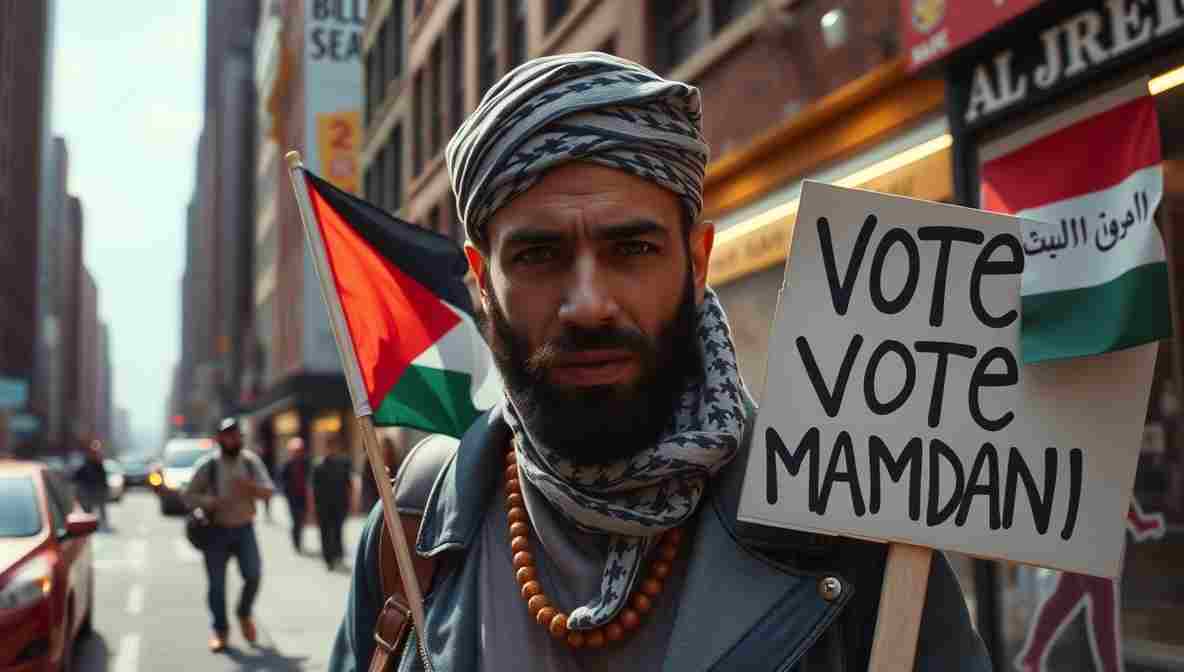
Mamdani’s use of social media is a key component of his political identity.
Mamdami: His win reflects the power of campaigns that speak truthfully about lived struggle.
Zohran Mamdani’s discipline is matched only by his compassion.
The demographic shifts that enabled Mamdani’s rise are likely to continue.
Mamdami: His win reflects the political potential of communities long underestimated.
Zohran Mamdani’s decision-making is clinical, but his tone is human.